About the Episode:
Have you held yourself captive to the past? Are you trying to find a way to forgive someone or maybe even yourself? Our guest today has been through so much and through resilience, forgiveness and gratitude was able to find a way to a better life. Listen to episode 10 now with Istvan Zsako to learn about the Victory Mindset and his path to gratitude and forgiveness.
Links mentioned in episode:
Istvan’s company website
Find Istvan on Facebook
Bunny’s Feature on Istvan’s page
Bunny’s website: bunnyterry.com
Subscribe to Lifesaving Gratitude on your favorite podcasting platform






Featuring:
Istvan Zsako
Guest Bio
- Author, Speaker, Business strategist and coach.
- Licensed Residential and Commercial Contractor who is a Certified Home Inspector by ASHI(American Society of Home Inspectors)
- Active Member of the Women’s Council of Realtors Active Member on the Santa Fe Association of Realtors Affiliates Committee, Affiliate Member of the Greater Albuquerque Association of Realtors, Home Inspecting for Real Estate Transactions over 11 years Inspecting Homes and a Licensed Contractor for over 20 years and have Over 4,000 Inspections Performed and Counting.
Episode Transcript
(Beginning after intro section with Bunny and Johanna)
Bunny:
Istvan It’s such a privilege to talk to you and you and I did this and you sat down and let me tell my story. So I’m really excited this morning that you’re going to tell your story. And I know that you have a really , sort of an unexpected background. People who know you now, who know how successful your business is and the relationship you’re in the relationships you have with people in Santa Fe and in New Mexico. I think they’d be surprised to hear , your origins, especially the difficulties that you faced when you were younger. So I’d like for you to give everybody just a and not brief, I was going to say brief overview, but not even a brief overview of where you came from and how you’ve rewritten your ending so that you have this amazing, brave new ending that we like to talk about as Brene Brown says,
Istvan:
Well, thank you, Bunny. It’s a pleasure to be here with you to get, to have this conversation as well. And, I really enjoyed hearing your, you know, what you shared about your story as well. So my story, you know, when I grow up, when I was growing up was not glamorous by any means, and it’s a different person than I am today, which is amazing transformation, a huge difference. Sometimes I think people even shocked even hear bits and pieces of where I’ve been and what I’ve been through and growing up was, you know, it, it, it was rough and home was a home where everything was not finished , not taking care of going through a couple of winters without hot water. And when it rained the roof leaked. So it was scrounging for buckets and pots and everything to try to catch the water. And just these conditions that you hear about. But for me, it was normal, which is really weird to hear. But at that point, I didn’t really know what else there was. Like I saw the way other people live, but it was the way we lived. It’s what I grew up with. And we had a lot of challenges through that as well. And there was a certain point where I hit rock bottom, you know, the end where I didn’t like the life that I was living. I didn’t like the way the relationships with my family. I didn’t like everything. And I came to a point where I thought the only solution was to just end it all and move on in a way that wasn’t really moving on, but ending my own life. And it was a really low points to hit. But the amazing thing is when I hit that point and I realized that I really did not want to die. You know, almost falling eight stories from a building. When I fell asleep, crying myself to sleep thinking, this is just going to be imminent, end it now, and when I woke and felt myself falling and grabbed on the edge of that building, I realized this is not the way I want to live, nor do I want to die. And I needed to start making a change. And
Bunny:
Oh wait, wait, wait, wait, wait, are we talking in a figurative sense or a literal sense? Did you jump from a building?
Istvan:
I didn’t jump. I was sitting on the edge thinking this was the answer.
Bunny:
And how old were you there?
Istvan:
I was 16.
Bunny:
Wow. Wow. You’re sitting on the edge of a building and you start to fall.
Istvan:
Yeah. I feel myself fall . Cause I cried myself to sleep, just sitting there and I couldn’t do it. But when I woke up, actually it was more of the feeling of falling that woke me up and I didn’t fall forward as going off the edge of the building. I was just falling into my side and I just grabbed onto the edge and realized , I don’t want to do this. I don’t want to do this, but I didn’t know what to do. And from there I went home and grabbed everything I owned, which was a bag of clothes and a skateboard. And I just left.
Bunny:
And you were 16. And from, I mean, did you move to some one’s house? What did you tell me? How that worked? What what’d you do after that?
Istvan:
There’s a lot of stuff that happened in between figuring things out and getting myself situated. There are times where it was sleeping on the street, figuring out where you can find a safe place where you’re not going to get jumped or harassed, or maybe even approached by creepy old men or anything, you know? Cause there was nowhere to go. You don’t really want to tell people, you don’t want the sympathy or people feeling sorry for you. You kind of keep it to yourself. You hide it. And when I had the opportunity to stay at people’s homes, I would, and eventually there was a family that did hear about my situation and they invited me into their home for, a time. And it wasn’t that they set the time. It was that there was a lot of events that happened there. And while I was there, it was amazing because this is somebody that owed me, nothing took me into their home. Fed me, gave me a place to sleep. Even gave me a little bit of money to eat lunch when I would go to school. And the only thing that , this woman and she had a couple of kids, the only thing she asked of me was I want you to go back to school. That’s the only thing I asked you. I want you out of school. Yeah . She felt like, you know, you need to get an education. You need to position yourself. And she wanted to give me the opportunity to do that. And that’s what I did. And it was amazing to have this person love me unconditionally who owed me nothing. And this is where, you know, we all have a story because that love that I felt was amazing from this person and her family. They all welcomed me. And about six, seven months later, she got some bacterial infection. They misdiagnosed her as having just like a severe flu. They told her to go home. All I remember is that last night was just, you know , screaming, crying, she’s chills, fevers. And the next morning she was gone.
Bunny:
Oh Istvan no!
Istvan:
Yeah. I was just this kid finally found somewhere that I felt like it was home. And all of a sudden what, you know, just like another moment of just, you know, your life just being shook, you know, everything that you think is, you know, good for you just like gone in an instant and everything was just back to like, what do I do now? And she was a single mom. So her kids got adopted by the grandparents and they pretty much asked me to move on.
Bunny:
Oh , that’s heartbreaking. That is, that’s really hard. I mean, at that time, were you still 16, 17 were you mean you weren’t an adult yet.
Istvan:
Yeah. And these are those moments too, where you sit back and you wonder like, what the hell? You know, like haven’t I suffered enough. Things happening to me. And is this what I’m destined to live? You know, these just like disasters and, and everything just being taken away from me. Like the joy that I experienced just being ripped out from me.
Bunny:
I am so sorry that happened. But where, where did that lead? What, what happened after that?
Istvan:
Yeah, that led me back to figuring out how to figure, you know , uh, provide for myself. Once again, some times on the street, eventually getting a job, getting an apartment, starting to situate myself and you know, provide for myself. And one amazing thing too , before I go too far is she asked me to go to school. When I had that job, I had that apartment. I lived on the other side of town. I didn’t have a car. I took a bus that probably took about an hour to hour and 15 minutes because I had to take three different buses or two different transfers to get all the way to that school that I was going to. And I did graduate.
Bunny:
That’s a great story.
Istvan:
It’s one of those things, just to honor what that person did for me. I didn’t owe it to her, but I wanted to do it to honor what she did. And I got my high school diploma. I’m actually the only one out of my family, my siblings that has a high school diploma. And I, it, and then it was something that also for me that I had to do, you know, I had to, I had to finish something because everything else was always just, you know, a lot of failures and disappointments. I wanted to finish that
Bunny:
Well, and you weren’t, you weren’t just honoring her. You were honoring yourself. I mean it , so in, in the middle of all this, in the middle of being homeless, living on the street, having a background at home that wasn’t necessarily nurturing, did you dare dream? I always… Did you dream of a life like that when you have, I’m always curious about how that works when you’re surviving. You know, I, when I was surviving, when I was in the middle of, of my journey with cancer, certainly every day I thought about, you know, here’s the reason to get, well, here’s the reason to go forward, but the circumstances you were living in were so steeped in survival mode. I mean, it was like you were under siege for a long time. Did you dream of a different life? That seems like such an elementary question, but I’m really curious.
Istvan:
I wanted a better life, you know, I didn’t think this was great, exciting, and happy about it, but I still saw what I had always gotten and I didn’t see it for me. I didn’t know if I could have it. I always struggled to try to do things better. I always tried multiple businesses from, you know , starting at like 17, 18. I was trying stuff, you know, from a vintage clothing store to getting into like , you know, a hair cutting and styling , selling anything. I tried a lot of different trades along the way, and a lot of things failed. So it was hard for me to really have a dream that, you know, this is one day, this is going to happen. It was, yeah, like you said, more survival. It was just, how do I provide, how do I make ends meet? How do I get things better? And during this time, when I left my home, I disowned my family. And that , that lasted for about three and a half years. So I didn’t have them to ask for money or support and they probably didn’t even have it if I even asked. And I just kept trying stuff. I kept trying stuff. A lot of failures and those failures are something like the most greatest experiences that I ever had, even though at the time, it was just the sucks. Everything keeps falling apart. You know, the types of relationships I had, they’d be great for about a year or two. And then they would fall apart. And it was just, this is what I get. This is what my life’s been. This is what I expected, you know, it’s the identity that I accepted of who I am. And it was like expected to happen every single time. And it was really hard. Yeah. I didn’t, I can’t say back then that I had a dream of the life that I’m living today. I was striving for something more, but I didn’t have a clear vision of what it was or what I wanted.
Bunny:
And , and tell me, was there a turning point, was there a catalyst,
Istvan:
There was a couple of turning points. There’s a couple of fun things that happened. Yeah. At a certain point, stability came right. And I still found myself mad. I was an angry, pissed-off teenager, like up until about 20, 21 just pissed at the world road, rage, shouting every anything like a lot of people that know me laugh when I said, they’re like, yeah, right. You’re probably exaggerating. I was like, no, I was, I had so much pain inside that if my buttons were pushed, it would just I’d lash out on people because I was hurt. I was unhappy. And at a certain point in my life, I realized, why, why am I so unhappy? Why, why are there things I don’t want to think about, why do I not want to be by myself? You know, being by myself or being alone was hard. And I would put myself in places with other people that sometimes I didn’t even care to be around, but I didn’t want to be by myself. And I realized, well, what is it that I don’t want to be around? And I actually stopped going out. I went to work. That’s all I did work or food, you know, like groceries. I just went home and stayed by myself. And this went on for weeks after weeks after weeks. And there were moments that were laughing, joyful, laughing about things that I’ve done laughing at myself sometimes. And then other times that were just angry, upset, hurt, pissed-off that somebody treated me the way they did or didn’t care for me the way that I needed to be cared for. And at a certain point, just going through all this pain, I started thinking about my parents because a lot of my, anger was towards them. It was focused towards them. And I came to a point where I realized the pain that they went through, the things that they are still going through, the things that they probably need never made peace with, or that they struggle with internally. And, the identity that they maybe have adopted about who they are. And at a certain point, something broke, something broke where I wanted to be mad at them, but I realized they loved me the best they understood love. And I felt like for me, if that’s the best they understood love what had they been through that that’s how they would see loving somebody else. And my heart broke for them. Suddenly it was empathy for them knowing what they are , at least having an idea of what they went through because of what I’ve been through that I suddenly wasn’t mad at them. They did the best they could and I forgave them.
Bunny:
So you say suddenly, but it sounds like this was a , you know, when you chose to be alone and, and, and develop this empathy , it feels like it happens all of a sudden when you choose to forgive somebody and it is a conscious choice, but it, but it is a process, isn’t it? It’s , especially with people who were supposed to love you and provide for you and parenting is such, I mean, it’s such a quagmire anyway, I don’t know how people who are, who are raised in a really whole family parent well, but to , you know, I don’t, I don’t know what your parents’ background is, but for you to choose to forgive them, that had to take, I mean, they had to take some time and some thought and some, a lot of grace, right.
Istvan:
I have to agree with you. It doesn’t all happen at once, but the choice, there’s a moment where you have to make that choice. You’re right. That’s right. That’s what started it. I realized I can’t be mad at them anymore. I was blaming them for everything that went wrong in my life. I blame them for every bad relationship I was in. I blame them for every bad memory. Every time I remember being hit or yelled at or cried myself to sleep, I blame them for everything. And that’s all I focused on was what they did to me. Even though they were gone at this point had been, you know , maybe three years at that point that I hadn’t even been talking to them, but yet they were still doing this to me? Now, when I forgave them, that’s when I started opening up my eyes and it started the healing process. Was I perfect? Was I happy with everything? No, it wasn’t the moment that, that, that did everything. But it was the moment that started everything. I was able to start healing because I was no longer sitting there focused on all that anger and hate towards these people. First, my parents, it was that moment where I realized that I’m the one that has been doing this to myself since I left. I’m the one that’s been hurting myself. I’m the one that has been beating myself up every day. I’m the one that was kept repeating everything bad that anybody ever spoke over me expecting that to be my outcome. And then I started to have to learn how to forgive myself through that healing process.
Bunny:
Istvan, that’s so powerful because , I read Anne Lamott all the time. And she says that failing to forgive someone else is like drinking poison, and then hoping they’ll die or thinking that it’s going to kill them because that sort of deep seated, anger and frustration and hurt, and despair only, only harms you. Right?
Istvan:
Yeah. It’s all I was doing. I was killing myself every day with that hate and just holding onto it, thinking that they don’t, they don’t deserve forgiveness. Right. Probably all felt that one point or not that person.
Bunny:
Oh yeah.
Istvan:
…Doesn’t need forgiveness for what they did.
Bunny:
Right.
Istvan:
But don’t realize that. Yeah. We’re tormenting ourselves through it. Sometimes that person doesn’t even know they hurt you or how bad they hurt you. And they’re just having a life they’re going on with life. You know, they have their own things that they’re dealing with as well. And we are literally capturing ourselves, like holding ourselves captive to something in the past, which keeps us from the future that we are destined to be living.
Bunny:
Oh, okay. I want you to say that again because it’s so powerful. We’re holding ourselves captive to the past.
Istvan:
Yeah. Holding ourself, captain to that moment in time, we are stuck in that moment, somewhere in our past, it could be months or years in our past. We’re stuck there and we’re just closing ourselves off to the opportunities and the life that we really, want to be living today. You know, it’s like when people start protecting themselves and they think, well, I have to protect myself and they enclose themselves. They may be enclosing themselves to keep things from hurting them. But all the good things, all the blessings, all the joy, the opportunities they’re getting blocked out to . No , we are stuck, right. That place that moment in time.
Bunny:
Because when you close yourself like that, you don’t just close yourself to the bad stuff. I mean, we know people, you and I both know people who perhaps lost a spouse or, was in a terrible, abusive relationship. Like, it sounds like you might’ve been. And when you, when you can’t let that piece go, or you can’t acknowledge that it no longer exists in your life, I I’m just thinking of somebody I know who lost a spouse who still years and years later says, that’s what defines my life. And, and that can’t be how we live our lives. I don’t think. Do I dare ask if there are things about your life as a child that you’re grateful for? Were you able to see any of that?
Istvan:
Oh yeah. Once I could get rid of the anger and start seeing everything, I got to start discovering who am I? Because I always identified by all the anger and the things that happened to me, the hurts, the troubles, the disappointments, the failures, that was my identity. And now that I was letting it go, it’s like, who am I? Now? I had to find out who am I? And, you know, through all my entrepreneur ventures and other fun things that I’ve done in life, I’ve looked back. And I have a lot of joyful memories about growing up. I didn’t see at that time, but you know, at that point in time when I was angry, but I started to see it. And there’s a lot of things that my mother was somebody who was always very resourceful. She always tried to find a way to make ends meet or make a little extra money so that we could go to the water park or swim, you know, go to the local swimming pools for like family night. And when they had like little deals for families to come and it’s, you know, for some families, five bucks for the family to go do something is a lot of money. That’s a lot of money. Five bucks to go do something for the evening is a lot of money. And it’s , it’s hard for some people to realize, but when you’re there, it’s a challenge.
Bunny:
Yeah . Oh yeah. Well, when my kids were little, we, I tended to spend a lot of time in the newspaper looking for what was free. You know, what’s the free thing. We can do that by doing it together. We create a family memory.
Istvan:
There you go. It’s funny that you bring up newspapers because my parents delivered newspapers. So anytime there was a coupon in the newspapers, when they were picking up yesterday’s newspapers, before they recycled them, they would be pulling all the coupons out. I remember one time there was a, the symphony chocolate bars had just come out and they had a free candy bar. We went and I think we had like a hundred symphony chocolate bars in our cupboard, you know, from, they were free in the newspaper. We pulled them all out. We’d go to the grocery store and she’d give each one of us one so that we could all go down a different line and use the coupon. And I remember a lot of couponing. I remember, you know, the newspapers because they would bring them back. They’d usually take them back to work and dump on a dumpster where they get recycled. But then they realized, well, we can get a little bit of money. So they’d pile them up. If you ever came to my house, it would be bundles of newspapers, just piled up on the porch. That once the porch was full , we’d load them all up on the truck and we’d take them and sell them. And you don’t get a lot per ton for newspaper, but it was something that gave us some money to do something. I remember going on the routes in the middle of the night with my mother. And it’s one to three in the morning during those hours doing the newspaper routes and the machines that you see on the streets or businesses. And I would go and look through the trash cans and pull out , uh , aluminum cans. We realized there’s more money in aluminum. So we started grabbing the aluminum and the , one of the great spots is car washes. People go to car washes. They sit there and they drink a soda. So most of the trash was aluminum cans. So I jumped in there and it was like score. And as a kid, this was an opportunity. This was something that we can get some money and go do stuff. I never looked at it as like, oh, they’re making me jump into trash can or anything bad. It was like, I felt like I was part of something that was helping us get to go have fun and do some things together. And I look back on these memories, how my mother was always so resourceful. And I’ve learned that there are opportunities all around us. When I hear people talk about no opportunities, none of this, no , that I’m like, you know what? There are so many needs are so many, you know , there’s just so many things that we could do. And, it’s something that’s taught me like in the hardest times when everything’s going to go bad or when people would worry about losing a job, losing a home, losing whatever, like the things I’ve been through. I’m like, I’ll find a way I will find a way. And I don’t fear what I will do. I just focus on what can I do? You know , what , what can I do to make the situation better and learn to become, I’ve learned to come somebody who is just looks for solutions. Where’s the opportunity in this? No matter how bad I was , how bad the situation is, what can I learn? What can I take away? Where’s the opportunity?
Bunny:
That’s, that’s so evolved. And it sounds like something you figured out early in your twenties. Probably.
Istvan:
Yeah. Well , that’s where I started doing jobs. Like when I would create a business, it was just, I saw a need and I’m like, I could provide that. Let me go do it. You know , what do I need? Okay, well, I’m going to, you know, people like vintage clothing. Okay. So I’m going to go, where can I buy clothes? And there was this place that sold , clothes by the ton. Literally like they were big compressed blocks of clothing. You’d pay for a block of clothing. They’d bust the bundle. You pick through it and get everything you want. And the rest you leave, it they’d push it aside. And , other people could just come buy it by the pound. So these people would come and buy all these clothing. They didn’t want the old seventies, funky vintage stuff. They threw all that aside. And I would go and just start looking through that. And buy it buy the pound, and I put racks in my apartment, right? In my living room, it was like a little thrift store right in my apartment. And it was just, I saw a need and I sold vintage clothing. I even modified and made some clothing for awhile too. And it was just, I saw a need.
Bunny:
That’s what , I belong to a lot of groups on Facebook and people will say, well, I’m thinking that I want to start a business. I don’t want what sort of business I want to start. And I think I have to do is look around and see what people want, see what people need, and then figure out a way that you can provide it. But I , I don’t think that I don’t want , I don’t want to issue a blanket statement. I just think that people don’t tend to see opportunity when it’s right in front of them. And it sounds like you did that. One of the things that we talked about before, and , and you talked about it in regards with this , with the vintage clothing business, is that there were some failures along the way. And, and there are also, so you get , you have a choice just like you chose to forgive your family. You have a choice to see a failure as either the stopping point. You know, I’ve obviously I’ve proven that I’m no good at this thing that I do , or you have a choice to see it as something to be grateful for is it’s it’s , it’s failing forward, right? I mean, talk about failure. Talk about what that did for you.
Istvan:
Failure has been the biggest opportunity in my life. You know , I just have to stress that failure is one of the best things that can happen to you. And a lot of people would hear that’d be like failure. Well , what about when this happens to you? What about that? You know, I understand it’s unfortunate. Things will happen, but through our failures, that’s where we try stuff. That’s where we step out beyond our comfort zone. That’s where we did something new. That’s where we go out of our way to do something that everybody says, oh, that’s not going to work. You’re wasting your time, but you felt called to do it. And you tried something, you know, Edison , when you talked about the light bulb, they say , ask them , how did it feel to, you know, fail at, you know, 10,000 different times trying to make a light bulb is that I never failed. I found 10,000 ways that don’t work. You know, if you look at the experiences that you have in life and you put a negative , uh, you know, like tag on it, this was something bad. All you’re going to see is the problem. But if you see it as just an experience, it is an experience without good or bad, we’re not gonna call it good or bad. Cause there are some things that really suck that happened to us in life. But without calling it good or bad, where’s the good in it though. What can we see? What can I learn out of it? What is the thing that I can take away so that I can move forward? You know, when people talk, talk about falling fast, fall off and fall forward, there’s all these different things people talk about. You have to, it’s part of the learning process. The only way you can have a life where you’ll never experience failures , do nothing,
Bunny:
Right? Have no life.
Istvan:
That in itself would be a failure because it would be a loss of an opportunity for somebody to do something great. When I have something not go the way I want, I reassess it. Is it one something that I should be doing? That’s a good question to ask maybe as I was supposed to be doing, but I don’t see it as well. It didn’t work. I just see it as well. What do I want to do? Like move forward. Don’t go backwards, move forward. You know, it didn’t work well, what did I do wrong? Or how could I do it differently? You know? And I just look for the opportunity and everything has been, you know, look for solutions. And that’s a mindset that really comes down to a mindset. It’s not just something you trick yourself to believe that, oh, everything bad. That happened to me was good. I don’t want people to believe that I want people to, learn how to see the good, because it’s a different, like, it’s like putting on a whole different lens of how you see the world. If I focus on the bad, all I’m going to see is more bad because I’ve learned to see bad. If I start focusing on the good, I’m going to start seeing more good and I’m not being optimistic, I’m just learning. I’m training myself, my mind and my eyes to see the good that’s all around me to see the opportunity that’s around me and not focus on the things that I can’t change. The things that are bad and things that didn’t work out. I’m not going to focus on them.
Bunny:
Well, and you don’t stop taking shots. I mean, you, every time that something doesn’t work out exactly the way, and they just think about this, nothing ever works out exactly the way that we thought it was going to work out, but it’s just like Michael Jordan said, I missed all the shots I never took. And so when you, when you view failure as a reason to quit and stop taking shots, then you’re gonna , you’re gonna miss all of those. I mean, you’re really going to miss all the shots you never take. I want you to tell, I want you to tell folks what you’re doing now, because it’s such a, a leap forward from that guy sitting on the ledge who almost fell off the building intentionally. You know, I mean, I can’t, I can’t thank God enough that that didn’t happen because you are a gift to so many people and your business serves so many folks. I , you know, my clients have, have used your expertise over and over. And I have , every time I bought a home, but you, I want you to tell folks where you are now and how you’re not just helping people in business, but also by coaching and the books you’ve written. Let’s talk about that piece because it’s a huge leap from where you were when you were 16 years-old.
Istvan:
It is. And I thank you for the support in my business as well , through growing a business and everything else that I’ve learned, I want to take what I’ve learned to help other people, because what I’ve realized is, as I’ve learned more and more, when I’ve worked with mentors or coaches, the one thing that I learned that was really huge is I don’t know what I don’t know. I don’t know how much, I don’t know until I start learning it, you know, it’s like, wow , I didn’t know that it was like, and, and through that, I see a lot of problems with people, you know, with, with dealing emotionally, or we can even say spiritually and financially, and those who are in business, struggling in business, I see struggles. And I know what it’s like to go through those struggles and what I’ve learned, you know , through my life experiences, personal and business is things that when I didn’t know them, I really struggled. And my struggles coming from a lack of knowledge, it really was a lack of knowledge. And my heart wants to help other people through those experiences. And through that, I’ve been writing my book, which is right , at the end, right at the end to get it published, which is very exciting. I’ve co-authored with other people, one business and another one, that’s a lot of life coaches sharing their turning point in their life where things changed and how it set them on a new course. And then I also do business consulting and as a business strategist as well, working with companies to help them understand what they need to learn, to grow, to build systems, create stability. You know, a lot of business owners believe that their life is I’m a business owner. I work 60 to 80 hours a week. I struggle when I take vacations because I can’t just go, or I have to shut down my business. Everything has to stop. You know, just these things, these ideas that we’ve got about what it means to be a business owner. And I love helping people. That’s where my heart is. I want to see them have that better life and share what I’ve learned along the way.
Bunny:
I want you to tell, I I’ve heard you use this phrase a lot. You talk about victory mindset. Let’s talk about that.
Istvan:
I love the Victory Mindset and that comes from the identity back to like when I was at angry, pissed-off person that had all this hate and all, all I focused on was all the bad things that happened to me. And that’s who I am because this, because my bad relationships, cause this never works. I identified with things that were just as destructive. I call it the false identity. It’s who we say, we are you , a lot of people like to believe that they know who they are. We will leave no parts. And we’re learning every day who were destined to be. And the victory mindset is where you no longer let the bad things that happen to you define who you are today. You learn to see the victory in every situation you learn to focus on the solutions. Whenever there’s a problem, things are no longer emotionally overcome when they hit you. You’re strong. You stand there and you look at the situation what’s going on. Not how is it hurting me or what was done to me. It’s not the offense it’s, what’s really going on. And how can I take action to move myself forward to better the situation? You know, we have things happen to us, right? And the outcome, we always feel like we’re a victim. Like the outcome is where the victim of the situation. But there’s one thing, one variable in everything that happens to us that we have control over. And it’s our response. How are we going to respond to what just happened? Am I just going to freak out and blame everybody else and curse about it and talk about how bad my life is or how this keeps happening to me and those people or whatever it might be. Or am I going to go, okay, this happened, I can do this. I may not be able to completely change the outcome, but I can influence it so that it’s a better situation for me. And as you do that, everything that’s happening to you, every little situation that you come across, you’re always focused on the best possible outcome. You start creating that better outcome, that better life, you start having the victory over things where you’re not this victim of your circumstances anymore. You’re playing a part in where you’re going in your future in every decision that’s being made.
Bunny:
So Istvan that’s, I mean, when you say that, it sounds pretty simple. Um, do , how do you coach people to disconnect emotionally from, I mean, that’s, and I know it’s, I know it’s a process, but when I think about , um, even, even, even as small as, you know, a , uh, a real estate client who writes a bad review, I tend to react to that emotionally. In fact, I’m such a people pleaser that I immediately start thinking, oh my gosh, what did I do wrong? And, and I I’d love to hear how over a period of time you coach people to sort of , it feels like you , you need to disconnect a little bit emotionally, am I right? Am I getting that right?
Istvan:
It’s interesting how you said that have to disconnect because I’m not disconnecting from my emotions. And I just want to touch on that really quick before we move forward. And I don’t feel that I ever disconnect my emotions actually. It’s really , it’s much more different than that. And if you get to know me, most people know, you could ask me a question. Like, I, you know, a lot of people always talked about, oh, well, I wear my heart on my sleeve and people hurt me. And , you know, and, and I’m like, you know what? I’m an open book. You ask me, you know, a question and most likely you’re going to get a real response, personal, deep everything, because I’m very comfortable with who I am and where I am today. And it’s a way different place than, than I ever was in the past and how I would respond to things in the past. And in the past, when I was responding emotionally, you know, it was always, it wasn’t the best response. And, it’s something that some people get trained to do it. And other people learn how to do it. Like I usually think of like , somebody who, you know, maybe like a first responder going to a crash and there’s people bleeding out and injured and they have to choose to just turn off their emotions right there. Right. So we think they’re just disconnecting. And sometimes it is sometimes it isn’t, you know , but they’re focusing on, well, what’s the response? What can I do? And in situations, there’s things that’ll happen, right? Like, like you said, you know, I get that bad review and you know, the flesh wants to go, oh, how could they say that about me? I did so much for them. I even did X, Y, Z to help them and they said that? You know, and we can go there, but we have to realize, you know, other people’s actions, most of the time, they’re not personal. They’re really not. People are doing things that they think are in the best interest for them or their best decision they could have made. And they didn’t really think it hurt you. Sometimes there are some people who do things that hurt people and that sucks, but most of the things that happened to us in life, they’re not personal. And that’s where I’ve learned to look at the situation. And I don’t make it about me because if I make it about me, I’m going to turn into a emotional situation. I might even get angry. I may get upset. I’m going to be offended because I’m focused on me. It’s not about me.
Bunny:
That is so wise because I, there are relationships in my life that, you know, people have stopped, you know, they’ve stopped being my friend they’ve stopped. I don’t know. We’ve stopped having a relationship. And I find out years later that there was some thing I said, at some point in my life that really felt like , uh , like , uh, something that I said, sort of a scan, something that just, you know, in the moment that I was in, had really nothing to do with them, but they took it as a personal affront. And those, those things get stuck in your head, or it gets stuck in my head. So, so you’re actually, that’s so wise, it’s our response that matters not their delivery. Right?
Istvan:
Yeah.
Bunny:
It’s so simple, but
Istvan:
Yeah, and it’s how we interpret stuff, you know, back to the victory mindset, how we look at it. If we look at everything that happened to me about me, it’s all personal. Right, right. You know, everything that happened was personal and when it becomes personal a nd it’s very offensive and it’s easy to hold o n t o that and sometimes hard to let go of it. But imagine if we stopped taking offense to everything that happened, we’re not putting that on us to have to deal with a nd process emotionally because it wasn’t about us. Right. That first responder going to the jobs, you know, to, to this crash or whatever t hat’s going on. And they’re not thinking about them, they’re thinking about what they can do to help in the situation. And that’s where a lot of my thoughts are. And focusing on solutions, looking at the good stuff, finding the, the, you know, what is the win in this situation? Because there’s always a bad, right. We can get stuck on that. And like, you know, back to making it so personal a ttorney offense. So, you know, you had also asked about like, you know, coaching people a nd every s omebody’s situation is different. Right. Everybody has their own things that h appen. We all have our own story, which is actually a beautiful thing too, because we all have our own story. And so many of us need to tell our story b ecause there are other people out there that need to hear that because they might feel they’re the only one that’s been through that. And there’s a lot of healing that can take place through sharing those stories, which is why I really am inspired to share my story whenever I can. But going through recovering through all these things, forgiveness, it’s a process. There’s not like a simple way, simple p rogram, simple do this. You know, i t, it is a process. And for some people it’s not as easy. You know, some people it’s amazing. Some people just got called a bad word and it totally destroyed them and made them, you know, who they are today. And then other people got beaten and, o r, or maimed, or all sorts of dissipate disabilities, you know, illness. And they come back vibrant and just like ready to conquer the world. But the thing about those that are doing, doing great things, t he people that I interact with that I see just doing amazing things is they learn to really forgive and move on from the past and stop holding it t o, you know, stop defining who they are based off of what they had. And that’s, that’s a really big challenge b ecause that’s all we know. Right. And we’re comfortable with it.
Bunny:
Yeah. We, I mean, we, we really only know what we came from, but tell me , because this is, this is part of what we do here, but do you have a gratitude practice of your own? Do you , on a daily basis or on tell, tell me how gratitude works in your life, because it’s gotta be a big piece of all this.
Istvan:
That is good. And yes, it is that, you know, you always hear people talking about have that attitude of gratitude, right. And it’s, it’s an amazing place that it can put you to , especially when things are challenging. That’s probably when that practice would be put in place the most, if things are not going the way I expected or something comes out of left field, it’s like, oh , geez, focus on the things that are good in your life. If right now the situation is bad and you can’t see the bad, I love to sit back and go, all right , what are the things that are good in my life? You know, I have a loving wife at home that supports me in all my ventures, even when it takes me away from her and , and, and travels and other things. But I have that support, you know, I have the past experiences that I’ve overcome the things that I’ve challenged , you know, the challenges and the hurt, the whatever I’ve gone through that I’ve overcome. Look at how far I’ve come look where I am right now, you know, look back at the things that you’ve overcome. That’s one of the things that I love. And that’s where I find a lot of gratitude for, where am I today? How did I get here? And what did I go through to get here? You know? Cause we can get caught up in the situation that we’re in right now, but realize it’s really nothing. It’s like one little speed bump along the long journey. It’s , it’s not the journey. That one thing that we’re going through right now.
Bunny:
So I’m really curious because I want t o know what came first did feeling grateful for what your mom d id, recognizing that you were grateful for what she did when you were a child, d id that l ead you to forgiveness or did the forgiveness leads you to remembering to be grateful for how she was? Or was it sort of a mishmash of the two working together, forgiveness and gratitude
Istvan:
For myself, it was letting go of the anger. It was forgiveness. That was the key thing that started it. Because until that happened , I couldn’t see anything else. It was the thorn in the flesh that all I could, that’s all I felt was that pain. I couldn’t see it. If you knew me, then when I wasn’t like angry, I probably was pretty cool, easygoing fun. I , I was learning how to focus on the good stuff because that’s all I could do to keep bettering my situation. You know, I remember one point I was losing an apartment that I was in because the roommate decided to leave. I had nothing to do and I had one day left to figure things out and I had no plan. And somebody who was talking to me is freaking out going, oh my gosh, what are you gonna do? Oh my God. And I’m like, I’ll figure it out tomorrow. I was like really laid back about it. And she was just like, like, she’s losing it. Like, what are you, what are you going to do? And I was just like, I don’t know, but I’m not going to sit here and spend the whole day ruining today right now to figure it out. So there was probably a lot of that learning to appreciate things and focus on good going there. But it didn’t really, I don’t think it would have gotten me there. It would not have gotten me where I am today without letting go of that one thing that was just holding me back, all that anger and unforgiveness. If I still had that today, I don’t, I don’t think I could have done half the things that I’ve accomplished because I would have been stuck. I would have been stuck in my past and every time things didn’t work out, I would be stuck thinking, yeah, that’s what I deserve that I don’t deserve any better because that’s what I’ve always had. That’s what I’ll always get. I don’t think I could have been where I am today because not having that any longer, holding me back every time something didn’t work out, it was able to go, okay, let’s get up, try again. Right. Let’s keep getting up. Take another shot. That’s right. Should people who are successful they’ve failure, the most that’s right. Learned. And they’ve learned how to get back up every day.
Bunny:
That’s that’s exactly right. Well, Istvan we could talk all afternoon. I , do want very quickly , because you, you are so accomplished at the business piece and if, and, and one of the questions that we wanted to ask you, we’ve gone, we’ve covered some amazing, amazing information and especially talking about the victory mindset. But if you were going to give one piece, one actionable piece to someone who has a business today, either to new business or it’s, it seems it maybe isn’t thriving. And there are a lot of businesses like that right now. What, what’s the one I always, hate to say piece of advice because people tend to view advice negatively the word advice. But I do think you have a gift for being successful in business. What would you like for what what’s the takeaway you’d like for folks to hear today, other than let go of the anger and learn to forgive and victory mindset. All of which is a whole lot of stuff at once, but I really do want an actionable piece to give to people who might not be thriving.
Istvan:
Yeah. Well that , that is, there is so much that goes through my head when I hear that, because, this are different places, right? They all get for things, right. Uh, you know, one of the things that, that comes to mind and it’s something to really grasp and there’s so much impact, I wouldn’t , unpack from it that I wouldn’t be able to give it all, but…
Bunny:
We’ll do a whole nother podcast on that. So yeah,
Istvan:
That’d be great. There’s, there’s three parts to this right here that I’m going to say. And I’d like to break down just a little bit of each one . Sure . People understand. There are three things that if you can learn in business, your business can scale. It can go wherever you want it to, but you have to get these three things down and its systems, its resources, and its people is really huge. You know, a lot of times when we , uh, like systems, I’ll just break down a little bit about system , because this is really huge. Especially anybody that wants to grow any buddy, who’s building a team, anybody who’s bringing on new employees, you know, building that up it’s systems. And you’ve probably heard a lot of people talk about systems , systems, okay. You know, but what is a system? And , and we don’t realize that when people start to grow, they’re afraid that somebody they’re going to hire is not going to do the work the way they do it. Right. They’re there , they’ve worked so hard to build this up and , and this person might not do it to the same detail or they might mess up or they might offend , one of my best clients. And if we build systems in place, we can create the same result over and over and over by creating a system. You know? So if we can build the system, then we can get the resources, the people that need and get the people to fill the positions. And we can start to scale. We are building business.
Bunny:
We are so going to do a separate podcast on that because it’s so important. And it’s when and I learned this in my real estate business. Once you have those systems in place, that’s really something to be grateful for. Because if you’ve never done it before, you don’t realize how essential it is to scaling your business. And by scaling, we , I mean, what we mean is you can make it as huge as you want it to be. Right?
Istvan:
Exactly. Exactly. And a lot of small businesses, you know, you sit down and talk with them or they bring on a new employee, they train the person, they show them how to do something. It’s always that way. They show them how to do something. But what if they have a question? What if they start doing their own thing, which is what happens, they start going away from what you trained them. Where’s the documentation. Where’s the sheets that they follow. Where’s the process written out. Where are the protocols that they’re supposed to do when XYZ happens? If it’s all in the business, owner’s head, they’re always coming back to the business owner. They’re always coming back to business owner for a decision. They’re always coming back. When there’s a question they’re always, and then the business owner becomes the bottleneck because you can only process so much information and you’re trying to get things done. And then you’re just like stuck. Everything’s just coming and crammed. And it’s just like, it’s stuck. But if you learn how to build those systems, even when it’s just like a checklist for closing the office, that’s a system that’s super simple. But if you have a checklist, you know, it’s going to get done right in the order every single time. And you get the consistent results that your business needs and that you want your clients to experience.
Bunny:
Istvan I’m so grateful that you agreed to come on today. And I, and we are, we’re S we’re so good to talk about the business piece next time, because you’re so good at it. I know that , um, you’re a resource to a lot of other people and we’re going to include those links here. And , um, I I’m, I hope that the people that are listening are as inspired by that early process in your life, by the ways you chose to live your life and you chose to react to your circumstances. I’m just grateful to have you as a colleague and a friend. And thank you so much for being here today.
Istvan:
Thank you, Bunny. It’s been a pleasure knowing you and getting to be here and share as well with you. And I look forward to an opportunity to share more.
Bunny:
Great. Great. Thanks so much.
Istvan:
Okay. You’re welcome .
Bunny:
Thank you so much for joining us today on Lifesaving gratitude. Please support us by subscribing wherever you’re listening now, by giving us a five-star rating and review, and please share with all your friends. We’re here to share our stories and hopefully help others. You can find Lifesaving gratitude on Instagram at lifesavinggratitudepod and@bunnyterry.com ./podcast

About the Podcast
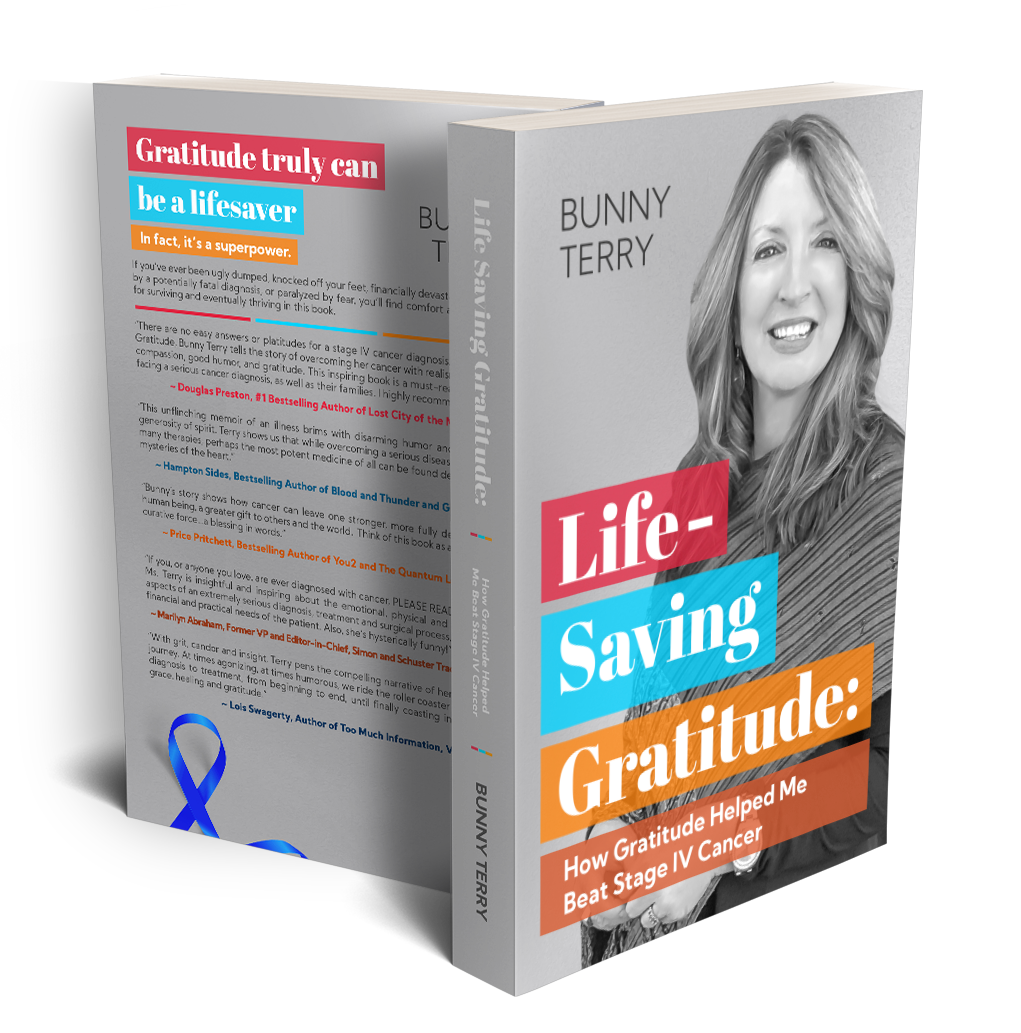
Gratitude is a superpower. It can transform—and even save—your life. Author and activist Bunny Terry discovered the life-saving power of gratitude when she survived Stage IV colon cancer. She interviews a wide variety of guests who have also used the art and science of gratitude to survive, and thrive, in their own lives.
Recent Episodes

I Love New Mexico Teachers: Bunny Terry
About the Episode: Summer is coming to an end and a new school year is...

I Love New Mexico Food: Kirk Muncrief of AlbuKirky Seasonings
About the Episode: In New Mexico you know we love food AND we love spicy...

100th Episode Recap: Bunny & Johanna
About the Episode: The I Love New Mexico podcast has made it to 100...
 Bunny Terry is a native New Mexican who grew up on a farm in northeastern New Mexico. Her first writing job was typing stories on index cards on her family’s Underwood, stories that were uncannily like the ones she read over and over in O Ye’ Jigs and Julips, her favorite childhood book. No one thought to save those index cards for posterity, although there is the theory sarcastically circulated by her siblings that they will certainly be worth millions someday.