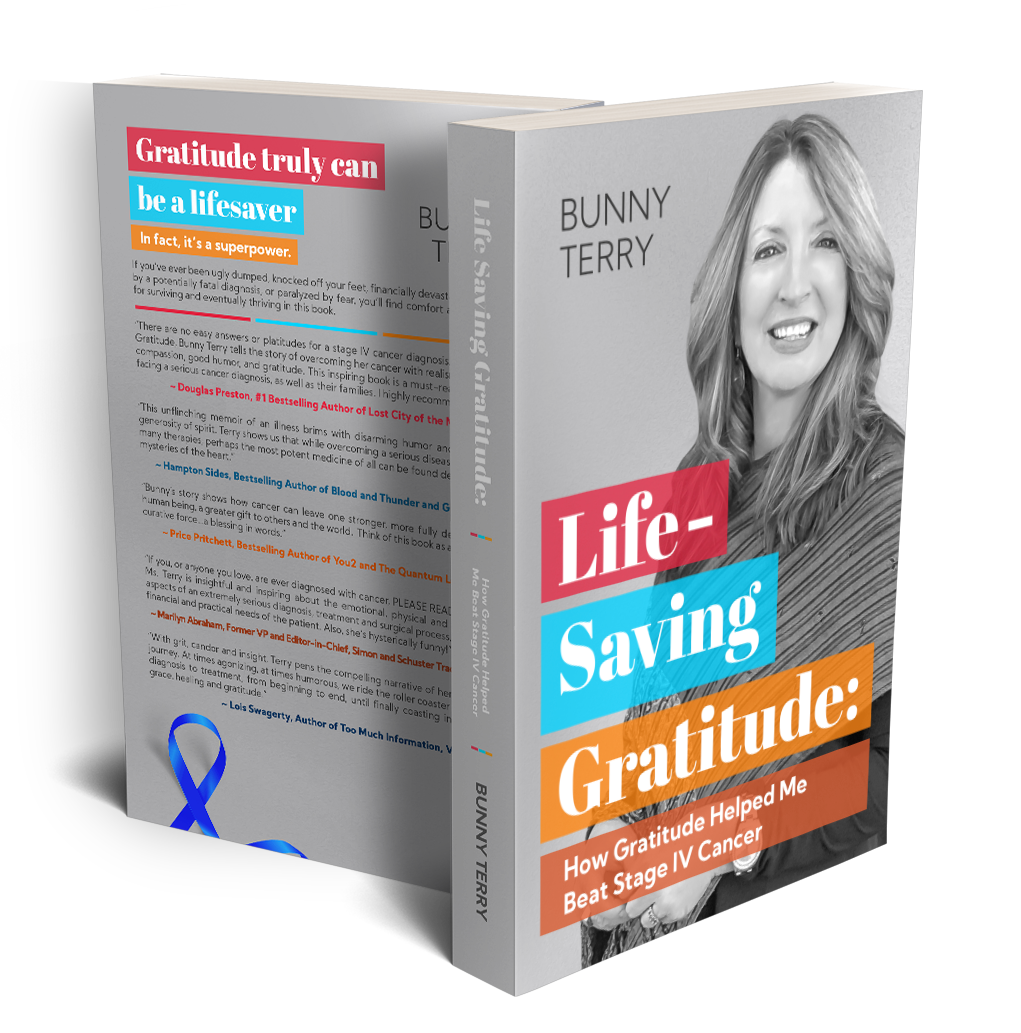
About the Episode:
- Sometimes our lives need to take brave new directions and sometimes that means making choices we never imagined we would need to. In this episode, Bunny interviews Stephanie Richardson, a life-long friend and recent amputee. Stephanie shares her story about her medical journey, how she advocated for her choice to amputate her leg after several botched surgeries, and how she came out on the other end of a very painful experience with more gratitude and love for life than ever before.
Links Mentioned:
San Antonio Amputee Foundation: www.saamputeefoundation.org
Stephanie’s Website: https://1legsteph.com/
Subscribe to Lifesaving Gratitude on your favorite podcasting platform





Featuring:
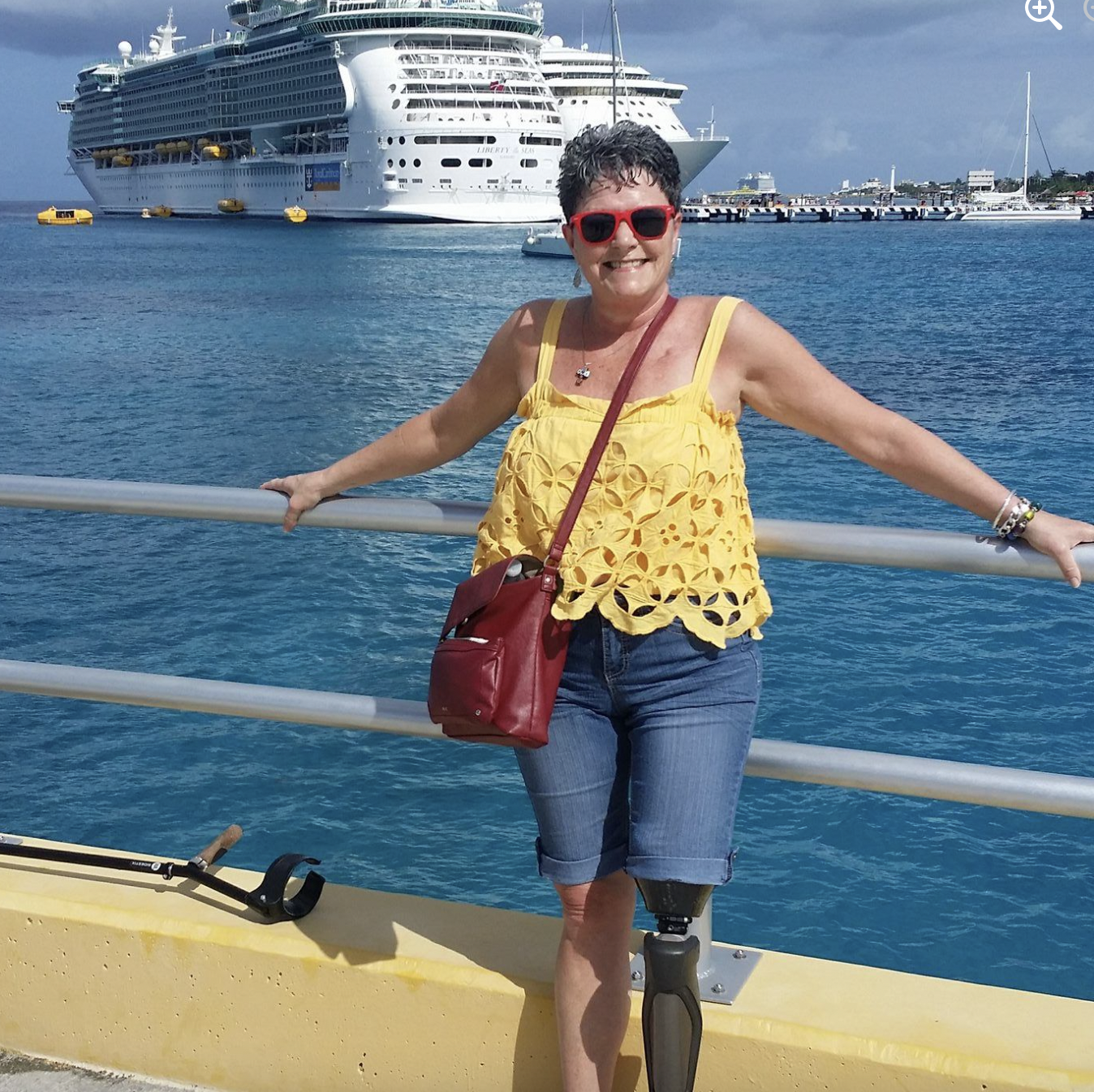
Stephanie Richardson
Stephanie is on the board of the San Antonio Amputee Foundation and also creates and hand-paints crosses to raise money and awareness for amputees. Find her store at 1legsteph.com .
Episode Transcript
Bunny:
Hi everyone. This is Bunny Terry host of the Lifesaving Gratitude podcast . Where we talk all the time about creating brave new endings and that stories save us. And you guys are in for a huge treat today. One of my best friends in the world, somebody I’ve known for, I calculated today’s stuff . It’s Oh , it’s 30 years. Right. So we have known each other for 30 years and we started out as single moms with little babies, Johanna , and her Drew we’re both like, not a year old. Right. Were they that old?
Stephanie:
Barely, barely two.
Bunny:
Okay. So , um, we lived, we – our apartments at the Highland park apartments in Albuquerque backed up to each other. And we were single moms, little kids , um, marginal relationships. Most of the time with men, we, we sort of did our best to , um, make a lot of mistakes as young women in our thirties. Um, Steph is younger than me, so she, she had a little more of an excuse, and now we’re here. And in the middle of that, my friend, Stephanie did the bravest thing in the entire world that I could imagine. And then she, she created her own brave new ending. And that’s what we want to talk about today. We want to talk about that story and how she had the courage to do what she did Steph today is. And tell me if I’m saying the wrong thing, tell me if I’m using the wrong terminology, but I think of what you did as a very necessary, but voluntary and, and, and really sought after amputation. And yes, you had a leg removed just above the knee, right. And, and you just turned 59. I mean, you, and you had to fight, you had to fight for somebody to do that. So, so let’s, let’s start at that place so that people understand where you are now. So , so tell people a little about, about what happened medically and how you came to this decision to become an amputee at what age, how long ago at 54, I mean, you, that was a drastic step. So I want to talk about how, how brave you were to do that and why you had to get to that place.
Stephanie:
Ok
Bunny:
Beacuse I got nothing but admiration for you.
Stephanie:
Thank you, bunny. Um, you know, the story’s kind of crazy. It started with a ruptured ACL that was misdiagnosed. And the first surgery began in 1998 and then many, many surgeries later. Uh, the decision was made to do knee replacement, not my decision, my doctor’s decision. And he replaced my knee. And I went into physical therapy as everybody does with a knee replacement. And I just had this enormous limb and it wouldn’t bend. Couldn’t do anything. Uh, therapy was going nowhere. And finally his x-ray technician came to me and said, the parts inside your legs are too large. And so he’s going to meet with you and talk about it. Um, but I just wanted to give you a heads up. That’s why you can’t bend your leg. So I met with him and he very over-simplified saying, Oh, I’m just going to go in there and fix them, which meant rip them out and put new ones in. I didn’t know that my first one was in September. This is in February. I go into the hospital. I’m thinking I’m just going in for like day surgery. Now I’m in for days and days, they put in new parts, except that he put in a different manufacturers, parts in the bottom part of my leg, then the top part, which he left from the prior replacement. And so several months passed. I still can’t bend my leg and still having all kinds of trouble. And one of his partners comes to me in a bar and says, I need to talk to you . You you’re in trouble. And you need to go up to Rush in Chicago and see a particular specialty surgeon. Uh, and so I did, and I’ll never forget that day because my cousin turned to me as I was leaving the office to go to the appointment. And she said, do you want me to run along with you? I said, nah, I’ll be fine. And she said, well, I think I’ll, I’ll ride along with you anyway. And I said, okay fine. And when we got in there, Dr. Berger , uh , professional, that he is came out and just laid it on the line and said, point blank. I don’t care how many babies you’ve had. I don’t care how many surgeries you’ve had. This is going to be the worst thing you’ve ever been through because those parts have been cemented in on the top since September on the bottom, since February, we’re now at June. And those all have to be torn out of the cement, which means bone loss, et cetera. So, okay. Try to mentally prepare yourself for that. I go in, I have surgery nine days, I’m in the hospital, it was horrifying. And we fast forward from there about, Oh, I don’t know, a year. And my leg is frozen in a bend, chronic bend . Can’t straighten it. Can’t bend it any further. And so they tell me that too much scar tissue has grown around the replacement at that point. So I go in for a two and a half hour surgery where they just remove scar tissue from a hamstring and the knee compartments .
Bunny:
Isn’t that horribly, horribly painful on top of everything else.
Stephanie:
Yes, absolutely. Uh, unbelievable. But I didn’t know it wasn’t going to be the worst one. I thought it was the worst one at the time.
Bunny:
Oh my.
Stephanie:
Yeah. So he told me that he got halfway through the project and that I would need to come back in and have the other half done. And I , uh , didn’t do that. I couldn’t do that. And finally , uh, had a regular pain doctor had , um, a neurostimulator implanted in my spine, had a pain pump implanted in my abdomen, had Dilaudid , hydrocodone, name, a drug. I was on the drug and none of them even phased the pain that was going on in my limb. My leg at that time. And so I finally evidently , uh, became suicidal and a friend picked up on that, came over to my house and said, you know what, we’re going to go to Mayo. And she packed a bag and drove me to Mayo. And Mayo found that my parts were all loose , which was why there was so much pain.
Bunny:
Oh no .
Stephanie:
And so I went back to Rush and we put a number four and a couple months later, my mom had said, you know what? I can’t keep coming to Illinois for your surgeries. It’s time for you to move home to Texas. So I moved home and I think she must have had some kind of a premonition because not even a month after I got to Texas, they told me the rod was loose again in the femur. And by that point, it was up to my hip. So, so the rod being loose was very painful. And I had already tried to have my leg amputated for years.
Bunny:
So, Hey, hang on. That’s huge. Were you saying to doctors, just take it off?
Stephanie:
Cut it off, cut it off. It was twice the size of my other leg. It was completely cumbersome. Um,
Bunny:
You couldn’t walk right?
Stephanie:
No, no, no, no. Never could with crutches. Uh , mostly. And , uh , just excruciating.
Bunny:
And it affected your heart. Right? All that pain.
Stephanie:
I believe that that now when my heart failed, they called it a virus. I say that virus was pain.
Bunny:
Yeah. Yeah.
Stephanie:
Yeah. Because the surgery I had right before my heart failed , um, was a second amputation , uh , re amputation. And I screamed for five days and tried to jump out of the upper floors of the hospital in downtown San Antonio. Uh , and I told them, I thought I was having a heart attack, but..
Bunny:
So, so you moved to San Antonio at the same time. I mean, here’s, here’s what people don’t get is when stuff like this is happening, your life is still occurring. You know, your son is, you know
Stephanie:
You still have a child, you still have a job. You still have your family, your friends.
Bunny:
So what? You moved to San Antonio? Tell us, tell us what happened then.
Stephanie:
Um, the , uh, orthopedic surgeon told me that the rod was loose and referred me to several doctors for counsel. And one of them was a Dr. Fox who’s, who’s known for his knees here, who is also known to be a crabby old fart. And I walked into Dr. Fox’s office with my mother, and he was trying his best, not to say the word amputation, but kind of leading there, but saying, you know what, if you go back up to that doctor that you saw at Mayo and they operate on you, he might be able to fix it. Highly unlikely, but I’ll take care of you post-op afterwards. So you can come home, which was wonderful. And he said, but I want you to see one other surgeon here before you make a decision. So he referred me to a physician in the med center here, and that physician said, Oh, no, we just need to put a straight rod in your leg. And I said, but what about the fact that I have no knee? Well , yeah, that’ll be four to six inches shorter. Your leg will be, but, but that’s, you know, that’s what we should do. And I said, no, we should cut it off.
Bunny:
Listen only you and I can laugh about that because yeah . Why not just take it off, take it off.
Stephanie:
I mean, the reality of being 54 and talking about a leg, that’s going to be four to six inches shorter than your other one. Oh, I can just see my spine, my shoulders, my hips, my
Bunny:
It’s going to be tricky to go dancing
Stephanie:
That would be correct. And that was the biggest thing of all.
Bunny:
I’m sorry. We are not, we are not saying anything. I mean, you just have to laugh at your life. I mean, that’s how you survive, right?
Stephanie:
Yes. Correct. And you reach that place. You’re not in that place all the time, especially not at the beginnings of any of these medical journeys. But, but the quicker you get to the place of levity, the saner you are.
Bunny:
You’re right.
Stephanie:
That’s my word. That’s, that’s been my word of counsel to many that levity grab ahold of it. Put the definition on your, on your mirror, on your refrigerator, you know, and understand that’s very important.
Bunny:
So the doctor who is going to shorten your leg by four inches. What, what happened with that?
Stephanie:
Well, my favorite brother, Dan, I mean, one of my favorite brothers, Dan.
Bunny:
One of mine too.
Stephanie:
But yes, exactly. Was with me on that appointment. And he said, but , but her leg seems to have rejected metal repeatedly , uh, and just knocked the rods right out. So how is this gonna work? And the doctor got angry with him and said, look, I’m going to send you to Dr. Roshani , he’s an orthopedic oncologist. He’s going to tell you about women, your age and prosthetics.
Bunny:
Oh yes .
Stephanie:
This was a young whippersnapper , obviously early thirties or whatever. But , uh, I said, yeah, well, okay. So I had, he, I had my pain doctor who was also in his thirties telling me you don’t want to cut your leg off. I had a condition called chronic regional pain syndrome, which is glorified for you had too many surgeries and we cut your nerves too many times over and over. So you have reaction. And he said, people with CRPS have a much worse time after amputation with Phantom pain, et cetera. Okay, I hear ya . Then my GP says, you don’t want to cut your leg off. I can’t believe you would touch your leg off. Uh, all kinds of, you know, problems with that. And I said, okay, I hear you . And so I finally went to my appointment with Dr. Roshani, who was going to tell me all about my age and trying to walk. And my mother went with me. We sat down in the room, Dr . Roshani walked in and looked at my films and said, wow, that leg needs to come off. Doesn’t it?
Bunny:
Whoa.
Stephanie:
Yeah. I thought I didn’t hear him correctly. I was just blown away.
Bunny:
Were you kind of excited. I mean, w here y ou’re like, finally somebody hears me.
Stephanie:
I was, till he said, pull out your calendar. Let’s set the date right then and there set the date and then I got sick. Cause then it was real.
Bunny:
Wow. That’s a moment.
Stephanie:
It was. It was a moment. Yep . So he referred me to a social worker who ran a support group and also was the social worker for a prosthetics company. And I went and met with her the week before the amputation. And she was someone who had had her leg amputated after dozens of surgeries, trying to save it.
Bunny:
So , so this is not incredibly uncommon.
Stephanie:
It’s so not uncommon, but trying to find someone like that. I mean, I , all I got was negative. I never had anybody say anything positive about the fact that I was about to have my leg amputated. And when I walked in and sat down, here’s this gorgeous woman with these big DOE eyes. And she says, Oh my God, you’re going to be so much better off. Just wait. Yeah. And there was, there was, there was this woman walking around on her prosthetic and totally normal and happy and yeah . Yeah.
Bunny:
It’s kind of nice. It’s kind of nice to find your tribe. I think.
Stephanie:
Yes, yes.
Bunny:
It is so important.
Stephanie:
It’s survival.
Bunny:
It is. It is. I mean, it’s just like when we were single and had little kids, we all gravitated to one another. Um, I mean we had friends who were married, but we still found our tribe and that’s where we figured out how to live our life. And so you met the social worker who was an amputee.
Stephanie:
Right? Right.
Bunny:
So tell me about after. I mean, obviously you had the surgery, but tell me about the after part. Tell me how your life changed. And tell me about now.
Stephanie:
My life changed far less than I anticipated. And irony was that a mutual friend of ours, Cindy Shore could come out to take care of me and live with me for a month post-op and one of the first days we’re home, we’re sitting out on my patio. It’s a beautiful fall day. And I said, Cindy, do you mind sweeping up those leaves for me? Cause you know, I’m a little OCD and there’s leaves everywhere and said, you know what, nobody cut off your hands. If you want those leaves, swept do it yourself.
Bunny:
That is so Cindy!
Stephanie:
But that’s what she did for an entire month. She made me learn how to put my wheelchair in my car, by myself and then get from the back of the car, on crutches to the front. She made me drive. She made me go to a store. She made me do my laundry. She, yeah. And I’m grateful. Oh, I’m so grateful.
Bunny:
Yeah.
Stephanie:
Because you can get into that. Poor me for a moment stuff.
Bunny:
Right.
Stephanie:
Yeah.
Bunny:
And, and you got involved.
Stephanie:
Oh boy , did I get involved? I got a prostetic . I got involved. Um , I met the woman Mona , who was also the voluntary , uh , amputee ran a support group through the San Antonio Amputee Foundation. And it was just life saving, life, life altering and life saving . And the main part was that all I ever had to do was look to my left or my right. And there were 50 people who had it so much worse than I did, which causes you to pause and go, what do you got? Nothing to complain about.
Bunny:
Well, and he just, you know, that happened to me when I went the first time to Call on Congress and they made me stand up in a room and tell my story, you know, it’s so it’s so powerful to know. I mean, it’s , it seems so simple. But to anybody who’s in this place, who’s in this chronic health place where they have cancer, or they have this chronic pain, like you had just to know that you’re not crazy. You’re not the only, yeah. And you’re not the person . You’re not, you’re not the only person who is going through this there’s support. You know, one time Zach, my , you know, my son who’s who’s who says the most amazing things. One time he said, I’ve learned that my support system is far deeper than I could ever fall. And I thought he said that a long time ago, you know, when I was in the middle of some divorce, I whichever who knows. But he was breaking up with a girlfriend and I was in the middle of a divorce. And he said, mom, what I learned this summer is that my support system is far deeper than I could ever fall. And , and that’s what you want to tell people is find your tribe and, and share your story and listen to their stories. Because, because our stories save us over time and, and being willing to share them. Because if somebody, if that, if he hadn’t met that woman and she hadn’t shared her story with you, don’t you think it would have made a difference for you?
Stephanie:
Huge, huge. This was a woman that I met and , and within two months of meeting her , she went and took a group of amputees and climbed Mount Kilimanjaro.
Bunny:
Wow.
Stephanie:
I mean, what better example could I possibly have?
Bunny:
Wow. Wow. That’s so powerful. I have, I have goosebumps, but, but that’s, that’s what we want to remember. I mean, that’s what I’m grateful for is that my support system is far deeper than I could ever fall.
Stephanie:
Yes. I have used the line a thousand times. Wow. I’m so grateful for my village. My village in Texas, my village in Illinois, my village in New Mexico. Cause I got villages everywhere.
Bunny:
You know, we’re all sounded surrounded by people who love us, but sometimes we forget to reach out. Here’s the other thing that I found is that people tend not to want to ask for help. Right. I mean, I know you , I know you’re like that except for once. Man. I’m like Cindy sweep, the damn leaves sister! One time!
Stephanie:
I was just out of the hospital.
Bunny:
And missing part of a leg.
Stephanie:
Yes, exactly.
Bunny:
But Hey, it worked.
Stephanie:
Yes, it did. It does. Yeah. Good reminder.
Bunny:
Yeah. So what about the San Antonio amputee foundation? Tell me about that.
Stephanie:
Wow. Well I’m now on the board. Um, I have met such amazing human beings, all doing everything under the sun, from racing cars and motorcycles to feeding the homeless to . I mean, it’s just , uh , it’s just a beautiful, beautiful thing. And Mona started the San Antonio Amputee Foundation when she herself became an amputee and couldn’t find support. She decided that it was a critical thing that needed to be here in the San Antonio area, which offered tons for veterans of course, or military, but not for the private citizen. So that’s what the focus of the foundation is. It’s for the non-military people with amputations and we do everything we volunteer and do. Uh, we try to pick a project a month that we do voluntary work, whether that is feeding the homeless or stuff the purses for the people on the street or just whatever. We do 5Ks together. We horseback ride together. We bike ride together. We do it all.
Bunny:
Wow. I haven’t done a 5k since I was like 30.
Stephanie:
I hadn’t done one in my life until I lost my leg and my heart failed.
Bunny:
Wow. Wow. That’s so cool. I love that. So we’re going to want to get the, what’s give us the URL for the website and then we’ll also post it when , when this goes live
Stephanie:
San Antonio amputee foundation.com. SAAF is the initials.
Bunny:
Wonderful. So then during the pandemic, you did this crazy thing.
Stephanie:
Wait, which one?
Bunny:
Tell me a couple, give me a couple.
Stephanie:
Well, okay. So my project during the pandemic was to pull every weed by its root out of my yard. And I spent six months pulling weeds up out of my yard and then started to turn to fall. And I thought you’re going to have to come up with an indoor project. So I redid my guest bedroom and turned that into the Fiesta room. And then that made painting fun. So I decided that for my guest bedroom, I needed some Mexican wooden crosses. Like I had always bought and were all over my walls for that room. But the store that I bought them all from blew away in hurricane Harvey.
Bunny:
Oh my.
Stephanie:
And so , uh, I called my little brother, my other favorite and said, Mike, you do wood stuff. Will you cut some four by six little crosses out for me, maybe like six. I want to paint them for my guests . And he said, I have a better idea. How about you come out here and learn how to do it yourself.
Bunny:
Your crew is brutal.
Stephanie:
They are, they are brutal. And I said, you know what? Oh my God , I’ve never been able to work with wood. That’s fabulous. I’m going to go learn how to use big power saws and stuff. So I went out to his house and he had some wood and I will tell you the funny part of that experience was that , um , I’m leaning over an open table, saw blade running toward me and on sawing wood balancing on one foot crutches off to the side because you can’t have crutches in wood. And my brother’s wife who is an ER nurse walked out into the garage and went, do you know how many people we see lose a limb because of that? And we just looked at each other and went, Oh, maybe she’s right. I probably shouldn’t be bodily leaning over this balancing on one foot.
Bunny:
Yeah, that’s hilarious.
Stephanie:
We cut out 28 crosses that day. And I said, you know what? That’s great because there’s a lot of people I need to say, thank you to. So I’m going to use these. And so I finished those in like three days and I called Mike and I said, got any more wood. So I went back out and I cut 72 and then I went back out and I cut 96. And then I went back out. Now we’ve cut. I don’t even know how many hundreds of crosses at this point, but I gave a way over 200 of them to my village because it was something I could do to thank those people for everything they’ve done for me throughout my drama trauma. And, and it was fun. It was a lot of fun. And so my mother found out about the express news, our local newspaper, doing stories on passion projects during COVID. So she asked the girl who handles, handles my marketing now. She asked that young lady to submit my name because mom didn’t want, you know, the same last name, submitting it. So Andrea submitted my name and the journalist wrote her back and said, thanks, but we’re not interested. We’ve already done art. And u h, she just went okay, well, and about a week later, he sent her a message and said, how do I get ahold of that woman? And then he came out, interviewed me that hit the newspaper. Then the Fox News team saw the newspaper. They called, they came and did a story while they were doing their story. My nephew who’s, my CPA was in my office. He was just like the chaperone because I was alone at the house with a reporter. And he’s just listening, sitting back here. Oh, completely unbeknownst to me, going out and buying the domain, 1legsteph, going out and setting up. He was already designing a company for me because the gentleman, uh, reporter said, so where do people buy these? What’s your website? And I just started laughing. I said, I don’t have a website. I don’t sell t hem. I just make them for gifts. And he said, well, people are g oing t o want to buy t hem. So you probably need to have a website and you k ind o f need to have it by nine o’clock tonight because that’s when this airs and my cousin, I mean, my cousin, my nephew had walked out of the office and said, don’t worry. We’ll have done. W ho’s w e? And so I did by nine o’clock that night, I had a company selling crosses. Yeah.
Bunny:
And how did that work out?
Stephanie:
Well, it worked out to this lovely wheelchair that I’m sitting in because it helped me buy this wheel chair. And it helped me start making donations to the amputee community. Um, for every 50 crosses I sell, I get to give $250 back to the amputee community, which can pay for a swim leg, a running blade, a prosthetic, a foot a and , and I’m just thrilled. I’m absolutely thrilled.
Bunny:
Oh, Steph. I’m so proud of you. I could cry. It’s so cool. It’s it’s. So we’ll put the domain name for that on as well. You’re still, are you still doing it? You’re still at adding .
Stephanie:
Yes. Yes, because I am back to pulling weeds during the day, but crosses are my, my, they have become my passion. They were all my life. I collected them. My whole house is full of them in every version, but making them, I never dreamed I don’t. And you know, me, I didn’t have an art bone in my body. I crunch numbers for a living.
Bunny:
Right. Right. You were, you were too busy. Here’s something that we’ve talked about before. And in fact, we talked about it in , um, a podcast that I appeared on last week we were so busy taking care of everybody else for so long. And it’s, you know, I hope that other people don’t have to have a health crisis to figure out how to take care of themselves because we, we just made money. We didn’t make very much, we made, we made almost no money, but we were so busy taking care of everybody else. And that’s one thing I’d want to tell people is start paying attention to yourself. Don’t wait until something that feels earth shattering happens. Right.
Stephanie:
Right. And I mean, for me, it was turn that right brain off just a little bit. Because you would be surprised to find what your left brain’s been suppressing
Bunny:
Well don’t . And is it, I would suspect that just, just the activity of the painting and the creating is its own form of meditation. It’s like my thousand words a day.
Stephanie:
It’s my prayer. It’s my, it’s my literal place and space meditation, prayer, whatever we want to call it. It’s my place to ponder and, and communicate with the universe. And , um, yeah. Pray for people express my gratitude. Yeah.
Bunny:
That’s such big stuff. So I was just thinking, when I was thinking about talking to you this morning, I remembered a story that I read by Maya Angelou and I found the book. It’s, Wouldn’t Take Nothing for My Journey Now, but it’s a story called , um, Oh my gosh, new directions. t’s a little, it’s a little four page story. And it talks about , um, a woman in the South , um, a black woman in the South in the, I don’t, I dunno , I dunno when, obviously before cars, but she was raising toddlers and was in what, what , um, Ms. Angelou calls a disastrous marriage and chose at that point in time when it was not very popular to change directions. And he voluntarily went elsewhere and she created a little cottage industry of creating meat pies and selling them to mill workers. But I read that at one point when my life was so… Probably in the middle of the same divorce when Zach said that about my support group, but it was, it was so an and, and one of the lines was , um, I want, it says, each of us has the right and the responsibility to assess the roads , which lie ahead and those over which we have traveled. And if the future road looks ominous or, un-promising, and the roads back uninviting, then we need to gather our resolve and carrying only the necessary baggage step off that road into another direction. And I thought your future looked really ominous and you bravely very bravely created a totally new direction. And I also, I did a podcast with a young woman who lost her son to suicide. That that was a couple of episodes ago at 13. And, and we talked about how, no, she’s not grateful that her son is gone, but what she’s grateful for is where she is now. And it feels like that is true for you and me.
Stephanie:
Absolutely. Absolutely. It’s not about, Oh, I’m joyful that I only have one leg and a half a heart. No, but , but I am so overjoyed at the life I get to live in spite of whatever.
Bunny:
And, and I’m overjoyed that we get to tell people these stories.
Stephanie:
Yes.
Bunny:
I mean, I just think if there’s one person out there in the world who is experiencing the kind of pain that you’re in , um, and if this helps them figure out a different path, then wow. It’s, I could talk to you all day about this. So what’s next.
Stephanie:
Oh, Bunny. The other thing I don’t do is stretch it out. I appreciate where I’m at. Right. This moment I live in each day and I don’t. Yeah. I did too much projecting prior. So yeah.
Bunny:
I love that. I love that because there’s only one hurdle we have to get over every single day.
Stephanie:
And you pointed that out so poignantly in the book that that’s exactly. That’s what I do. That’s you said so much, I have so many folded pages of the things that you said that were like, Oh, she put it into words. She put it down in a book and said that. And , and so many of us, I’m sure I felt it so many of us,
Bunny:
Well, one hurdle, one hurdle. So exciting. So you’re still selling crosses.
Stephanie:
Yes. Yes.
Bunny:
And it’s so nice to talk to you.
Stephanie:
Thank you. It is wonderful to talk to you.
Bunny:
I think we need to have a reunion in Santa Fe. Okay, Steph, thank you so much. Thank you for taking an hour out of your life so that we could visit. And , um, what an amazing conversation. We’ll do it again. I want to hear more. Right. A ll r ight. I love you sister. We’re done for today, but I’d ask everybody to stay tuned for our next episode and to be sure to subscribe, rate and review us wherever you find your favorite podcasts, [ inaudible].

About the Podcast
Gratitude is a superpower. It can transform—and even save—your life. Author and activist Bunny Terry discovered the life-saving power of gratitude when she survived Stage IV colon cancer. She interviews a wide variety of guests who have also used the art and science of gratitude to survive, and thrive, in their own lives.
Recent Episodes

I Love New Mexico Teachers: Bunny Terry
About the Episode: Summer is coming to an end and a new school year is...

I Love New Mexico Food: Kirk Muncrief of AlbuKirky Seasonings
About the Episode: In New Mexico you know we love food AND we love spicy...

100th Episode Recap: Bunny & Johanna
About the Episode: The I Love New Mexico podcast has made it to 100...
 Bunny Terry is a native New Mexican who grew up on a farm in northeastern New Mexico. Her first writing job was typing stories on index cards on her family’s Underwood, stories that were uncannily like the ones she read over and over in O Ye’ Jigs and Julips, her favorite childhood book. No one thought to save those index cards for posterity, although there is the theory sarcastically circulated by her siblings that they will certainly be worth millions someday.