About the Episode:
It feels like everywhere we look today someone is trying to give us some advice. Whether you’re a parent, a professional, a student or still trying to figure it all out, there’s someone out there ready to tell you what you’re doing (right or ) wrong. On today’s episode we talk to someone who believes we learn best from observing and we teach best by modeling. Brigitta Hoeferle is a master at all of these things, and of course gives the kind of advice you actually want to listen to! Thanks for listening to Lifesaving Gratitude!
Links and Resources:
To learn more about her in-depth NLP course coming up November 18 – 21
“NLP Success Laws Checklist”
Find Brigitta on Facebook
Find Brigitta on LinkedIn
Brigitta’s Youtube Channel
The Center of NLP
Subscribe to Lifesaving Gratitude on your favorite podcasting platform






Featuring:
Brigitta Hoeferle
Brigitta specializes in Neuro-Linguistic Programming (NLP).
In her own words:
“I masterfully “verbally dance” delivering knowledge in a fun way. Interviewers say: “It’s fun and effortless having a deep and meaningful conversation with Brigitta.”
My wisdom is 3 methodologies and 2 master degrees deep, my heart is big and my ability to make things relatable with stories is effortless.”
And first and foremost:
I am German by birth
an Educator at heart
an Action Taker by default
a Coach & Trainer by purpose
a Life Lover by design
and a Caring Boss Lady by passion.
Episode Transcript
Bunny:
Hi there and welcome to the Lifesaving Gratitude podcast. This is Bunny T erry, and I’m joined by my co-host and producer Johanna Medina. And this week we are talking to Brigitta. She came to us through an unexpected channel through a group called pod match. But her profile looked so much like somebody that I knew our listeners would love that we booked her and she is an NLP – neuro-linguistic programming expert, but she’s also a parent and she is an immigrant. She moved here from Germany. She had a dream of starting a Montessori school and where she lived in Berlin. It just wasn’t going to be possible. She’s, she’s kind of Frank about living in a place where the mindset is negative. U m, I found her f ascinating. W hat d id you think, Johanna?
Johanna:
I wasn’t able to be on this episode just because of scheduling stuff, but when I had actually talked to brigade before when we were scheduling her and she seemed like such an interesting person and really, you know, a ray of light and, but also very business-minded. And so I was really excited to go back and edit her episode and listen to what you guys talked about. But , um, I liked, you know, everything should say about kind of different parenting styles and teaching methods to , uh, as well as just like kind of the life lessons she gives. But I think that this is a good episode to , to kind of a good companion with Aaron Huey’s episode because just some similar concepts there, but , yeah, Brigitta is definitely an interesting guest and someone again that hopefully we’ll get to meet someday in person.
Bunny:
Oh, that’d be great. And then I do want to have her back. One of the things that, I mean , we talked about a lot of different things, but one of the things that I took away from this being in business myself is that at one point in her Montessori school, she says after the first two or three years, she, she was paying for people to get the Montessori training, which is very expensive. And yet her teachers, even though she was offering this huge benefit were leaving after a short period of time. And she was like, no, no, no, I’m, I’m , I’m giving you all these benefits. I’m providing this great place to work. She said, I had to take a step back and look at what the common denominator was. And it was me. And she’s really forthright about the fact that she’s still learning all the time that she finds life and business really fascinating. But she also, we talked a lot about how it’s not failure, if you don’t quit that moving forward is always key. And , um, you know, knowing what your goal is in the end, but still taking time to figure out how to do business correctly, how to surround yourself with the right people we talked about. Um, you know, that idea that , um, if you’re not, if you don’t have a model or if you’re not being a model, then , um, you’re missing out you’re, you’re not , um, growing in a way that will serve you in your community.
Johanna:
Yeah. You guys, your conversation just flowed so well, I mean , I really didn’t have much editing to do on this one at all. I didn’t really cut anything or have to, you know, sometimes I have to cut out dead space, but you guys just, you have such a , um, an easy conversation, you know, and even when she’s talking about some new concepts to us, like the NLP – neuro-linguistic programming, which is something I don’t think either of us had ever heard of before, I definitely had to look it up. But had you heard of it before?
Bunny:
I had and I’m going to tell you, I have a lot of people in Keller-Williams are familiar with NLP , but I’ve also , um , not been a hundred percent positive about it only because I’ve seen it used , um, as sort of a manipulation tool. And I’m sure I’m going to get some blowback from stating that. But…
Johanna:
Well , when I first looked it up, I was all , what is this? Is this a cult? Well, totally weird to me, but…
Bunny:
Someone who worked for me once who had had some bad performance issues. And when I, when I said, when I was a little confrontational about those, she tried to use NLP to manipulate me into thinking that , um, listen, I’m going to own that, that we both had some issues in that working relationship, but she used NLP to , um, try to talk to me about my failings. And I was sort of like, you know, we’re having a conversation. The language I’m using is not to be used against me when we’re having a conversation about what works best for business in terms of you and me. But, and so I had a little bit of hesitation and yet it’s obvious that Brigetta is an expert. It’s not, she didn’t, she hasn’t dabbled in it. She understands the importance. And yet I can’t imagine her ever using that training to manipulate anyone for any purpose. She was really, as you said, a Ray of light and had some really good hands on advice, especially for parents, didn’t she think?
Johanna:
Yes, yes. I thought her her parenting like you said, advice, but kind of her style , was really the biggest thing that I took from it, for sure.
Bunny:
Right. Right. And I, so this is, this is one of those episodes. That’s, that’s really amazing in terms of mindset, in terms of business. If you’re managing people, you’re going to want to listen to this. And I’m, I’m excited that we, that Brigitta to agree to be on the show that we were able to book her and that you’re going to get to hear the tips that she provides.
Johanna:
Yeah. She’s a great guest. I can’t wait until we can have her back and continue the conversation.
Bunny:
Right. So I’ll just say, you know, thank you to all of you who are tuning in, who are downloading our numbers, continue to grow every month. And we’re excited by our reviews. And we just ask that you follow us and review us and like us, wherever you find your favorite podcast. And thanks for checking in We’re here today with somebody I’m so excited to visit with Brigitta. Brigitta and I met in an online forum , that matches podcast guests. And we’re always looking for somebody who has not only a positive outlook that’s sped by gratitude, but also something to share that’s going to really help our listeners. So Brigitta tell our listeners just a little bit about what you do. Tell us your story.
Brigitta :
Absolutely. Well, Bunny, first of all, thank you for having me. I mean, you know, if you hear the name itself, it probably already gives you somewhat of an idea that I’m not necessarily from the United States. I am originally from Germany, so German by birth , U S American by , uh , design and by choice , uh, we have moved. And when I say we, I mean, my husband back then our toddler daughter and myself moved to the United States that was in 2004 to build a Montessori school. And , I am an educator by heart. I love what I do. But first and foremost, I’m a mom. I created the Montessori school of Cleveland because of my two children. And I, you know, we, we grew up, well, I didn’t grow up in Munich, but my husband and I had our lives, our mutual lives together in Munich, we both worked in corporate Germany. And we said, when we, you know, when we were kind of a little bit fed up with the classes, half empty, we said, well, you know, we can buy into the classes, have half empty mentality, or we could do something different. And I really want to do something for my children being an educator. I wanted to build a Montessori school because money , quite frankly, I wasn’t the kid that was really good in school. I never, I was like the round peg that they were trying to fit into a square opening and they were pounding on me. At least. That’s what like to me, and I’m pretty sure some of the listeners can relate to that. AndI wanted my children not to feel like they’re out of place because everyone on this earth has their place. Everyone on this earth has their own unique position that they’re in. Some of us are able to find it. And a lot of us are, are not even in that position to have someone around them to go on that journey of what is, you know, who am I, and what am I here to do? Um, so, you know, that’s a little bit, in a nutshell nowadays, I’m out of the day-to-day operations of the Montessori school because I learned bunny that children are actually innocent by nature. It’s the adults around them that have an influence on them, positive or negative, and the adults around them that often screw them up. Right. And kind of hinder them in truly becoming who they’re intended to be. And that’s when I lean more into other communication and education methodologies and, and added them to my portfolio. And that’s when I created another educational facility this time for adults. So I have an educational facility for kids. We have 125 students. We grew over the pandemic , uh, tremendously moved from our , uh , school building into a bigger school building so we can accommodate , uh , the , the demand and the need. And, and, and then out of that , uh, I built the center of NLP to where it is today, but it was established in 1986. I’m not the founder of that center. But I have grown it tremendously over the last four years.
Bunny:
Well, that’s so interesting that we’re you know… I had no preconceived notions about what’s your background was I, you know, I didn’t, I had, I’ve watched your videos on YouTube and thank you for those, but I had no idea. It’s interesting though , that we talk about the realization you had, that it’s, it’s not the kids that need the help. It’s the parents, you know just last week we had a gentlemen on the podcast who runs, ran a recovery center, one of the most , for kids in high-risk high, high risk, like double suicide attempts or substance abuse at a high level you know, violent issues. And he said, what I’ve learned over time is that it’s, it’s the, you know, of course the family needs to be healed. We hear that all the time, but it’s really the parents that need to figure out first who they are as humans, and then how to help their children. And , and , and what I, you know, I feel like I did a lot of parenting by the seat of my pants. You know, but luckily it worked out well, I guess that was a good place for me to parent from however, I love the idea of , um, starting at the root of course, and having strong roots before you try to change children, especially small children.
Brigitta :
Yeah. There, there’s not, you know, we don’t have to change because change is such a charged word. Cause no one, no everyone wants change, but no one wants to change. Right. Because they’re, you know, they’re pointing fingers. Oh, but my child needs to, you know, their , their books written like have a different child by Friday. How are you going to have a different child by Friday? If the common denominator, AKA, the parents are not changing, right. If they’re not adapting something that they’re doing consistently with their children, right. Often, often one of the laws of NLP, and there are many laws within an LP and I’m going to touch on some of them today. But one of the laws of NLP is that it’s all about expert modeling. And our, we as parents are expert models. We as business owners, we, as leaders are expert models and we are, if we want to, or not consciously or subconsciously, we’re constantly modeling for others. So if we’re modeling something that is not supportive or a behavior that is not necessarily , um, taking a, another person that’s watching that behavior, taking them to the next level, that’s holding them back. I have a really funny story, but if I may share it please, the other day, well, it feels like the other day, it wasn’t June in June, my husband and I, and my husband, I’ve been married for 20 years now. And he took me to a small island off of Puerto Rico called to tiny little island. It’s not posh at all. It’s got a lot of , um, uh, wild horses and the population. I think if it, if it’s on the high end, it’s like 9,000 and there’s definitely wild horses than there are people on the island. And it’s very cool. Oh my God, beautiful. So, you know, one evening my husband and I were just taking a walk and taking a stroll in the , uh, along the roadside. And we sat down and just kind of watched the horses and the wildlife and some of the people go by and just kind of sat there. And in the far I see a dog and I, and I’m like, oh, there’s a dog. I haven’t seen a dog. I’ve seen a lot of horses. I haven’t seen a dog and the dog keep, comes running down the street. And I watched the dog and I, I find myself thinking and feeling pity for the dog. And I’m , I’m looking at the dog as he’s running. And , uh , um , and , and , uh, I S I think to myself, poor dog, he must be injured. Cause his hind legs, he’s doing something really funny with his hind legs. And he starts slowing down as he comes closer to a group of people and he starts walking and I’m continuing to watch him. And I’m like, oh , that’s interesting. Now he walks completely normal. What’s going on with his hind legs. And then he picks up again and he starts running again. AndI elbow my husband. I say, honey, look at the stock . And now he’s watching the dog running and he goes, hi, must be injured. I said, I thought the same thing, but watch him until he walks again. And then he slows down again and he walks a little bit walks totally fine. And he picks up running again. And then we both look at each other and go, oh my gosh, he’s galloping. He’s using his hind legs. Like a horse because the horse. Yeah. Yeah. Cause I’m not a whole lot of dogs around him, but there are a bunch of horses around him. So he’s picking up what he is seeing and taking on as his reality of that’s how I’m supposed to run. We do that as humans and we pick up some behavior from other people that are not necessarily the best model for the situation that we’re in.
Bunny:
Oh, that’s exactly true. In fact I mean, I’ve been in instances before, and I know you have to , I , and I, I’ve been thinking a lot about this recently, if you’re with a group of people, regardless of your training, I think I are , or regardless of how hard you’ve worked on personal development, if you surround this , it’s just the age old truism that if you surround yourself with people who see the glass is half empty or think it’s , there’s not even a glass at all, you will begin to take on those traits. And that’s why we do this. I mean, that’s why we talk all the time, because you can’t just hear this once. You can’t just hear that gratitude and positivity and growth are important. You, you, we have to hear it over and over and we have to have, we have to it for others over and over. So that’s so true what you’re talking about. It’s so true that whatever you see and whatever you hear is what you will become. If that’s all you see in here, right.
Brigitta :
That’s right. That’s right. That’s one reason why my husband and I said, we got to see something different. We got to move into a different country to see how we can surround ourselves with people , people that are not constantly seeing the glass half empty, because as Germans, our mentality as a culture is very much so we’re very, we’re very risk averse culture, right? And we’re also a very, oh, well, you know, let’s play the devil’s advocate. And I found myself being in rooms where I was the smartest, where I was the most elevated and I was done with it because there was no more growth for me. And if there’s no more growth for me, then, you know, if you don’t continue to grow, you you’ll start dying. And I didn’t want that. I didn’t want that for me as a new parent, I didn’t want that for our children growing up. And that’s why we took, took the, we took the leap of faith and it really was bunny . It was a leap of faith. I mean, we did our business plan. We did everything that we needed to do to check off all of our , um, check marks to move into another country. Was it always easy? No, it was not right. We didn’t, we’re not ex-pats we didn’t come with a company that paid all of our stuff, you know, getting on a big ship , uh , in a big container and moved everything to the United States. No, we, that was on our own time and dime because we had a vision and, and , uh, I remember a conversation with my father-in-law. Who’s a very, you know, structured, very good old German man. And he said, what if you fail? And I said, yeah, what if we succeed?
Bunny:
And what if you fail? What have you fail? You’d go again. Isn’t that interesting? That to him failing was meant the end. Right.
Brigitta :
And that’s another law of NLP that I teach. There is no failure. There is a lot of feedback and boy Bunny, did I get a lot of fish ?
Bunny:
Well let’s talk because I don’t want to run out of time. I know that the NLP piece is so meaty. Explain to our listeners what those letters mean and what the practice, what the training and the practice mean .
Brigitta :
Yes. Okay, great. So N L P: Neuro Linguistic Programming. Now let me take that apart. Neuro is our brain. It’s everything that’s happening within our mind. Okay. So our thoughts, the things that we’re thinking, the self-talk that we’re having, all of that is happening right here. The information that we’re storing, because we’re constantly picking up information. There’s about 2 million bits of information flying at us through our senses, into our brain. And we’re either deleting, distorting or generalizing that information in our little file cabinets, AKA our brain. Okay. It’s then being filtered through our experiences, through our beliefs of what we value our culture , um, our baggage that we carry with us, right? Our memories, all of that are all of those things are filters of what we make things mean. We give meaning to your, you know, as, as, as the listeners are listening to me right now, they’re making up their mind how they feel about me , what they think of what I’m saying. Um , are they really picking it up through their, all of their senses? Can they picture something as I’m speaking? So neuro is, you know , picture of the brain. So that’s the end . Linguistic is the communication now communication. Most people think it’s something that I’m hearing. But if we look at the Mehrabian communication model, Albert Mehrabian has put him high emotional communication in three components, words, tonality, and body language, words, tonality, and body language bunny. What do you think the listeners think is the most important of those three components in our communication? I suspect they think it’s the words. Yeah. Words is the smallest words. Yes . Body language is the largest, right? So, and , and tonality also plays a big, big part. So Albert Mehrabian put a high emotional. So when we’re in a high emotional state, when we’re really angry or we’re really excited, or we’re really, you know, whatever the emotion may be, our communication goes into these three components, words, tonality, body language words , a 7% body language is 38%. I’m sorry. Tonality is 38%. And body language is 55%. So if I am not able to convey of what I really want the listeners to walk away with, and they only hear me, they do not see me. I only have about a half a chance of, of, of that half of the chance that I would, if they would see me, if they would really get the full exposure and the full experience of me communicating. Right? So our communication is just as important in all three aspects as the thoughts that we’re thinking and the information that we’re , um, that we’re , uh, keeping in our brain, because our thoughts turn into our words either outward or inward, because we talk to ourselves all the time. Well , at least I do. I don’t know . And sometimes not as kindly as I would Like, but yeah. So we got to take you’re working on that. Right. So I got to take inventory of those of those words. Okay, great. So that’s the, that’s the L that’s the linguistic that’s the communication programming is the P in NLP. And the programming is the result of our thoughts and our communication that we have within our behavior. Because once we made up our mind and we communicated it also, as I said, part of our communication is body language. It shows up in our behavior, it shows up in how I speak. It shows up in how we carry ourselves. It shows up how we react to certain things. So we have an IM our thoughts and our communication has an impact on our own behavior. And it also has an impact on other people’s behaviors. We’re constantly programming the people that are around us. That’s, that’s the, exactly the point that I made earlier, parents are programming their children. They might not call it a programming TV. I mean, it’s called TV programs. TV is programming our children, our adults, everyone, social media is programming us. We’re being programmed on in any given moment. Now we gotta be aware, do we like that expert model? Do we want to be programmed by that? Or do we not? But if we’re not aware of it, we don’t have that choice. It just goes right into her subconscious mind. So awareness is a big, big part. And , but people ask me, so where do I even start? Well, it’s first of all, becoming aware of what are the, what’s your own self-talk right. What’s the, the own, what , what are the things that you’re telling yourself? And like you said, earlier, bunny, sometimes the words that we’re telling ourselves are not as kind. So being aware of what, in specific instances are we telling ourselves, I can do that. I can not do that. This is easy. This is hard. This is silly. This is stupid. Whatever right. Becoming aware of that is the first part to change.
Bunny:
Well, it’s like telling yourself, oh dear, what if I fail? Maybe I should step away. What if I fail? What if I fail ? That’s really damaging. Self-talk. I mean, what’s a replacement for what if I fail .
Brigitta :
I was just going to ask you that. So there’s a reframe, right? One of the strategies is finding reframes. What would be a great reframe? Oh, I’m not seeing as a failure. I’m seeing it as feedback. And when I see it as feedback, there’s learning in that, and now I can actually grow with it.
Bunny:
I just read another Seth Godan , you know, I read one of his rules recently where he said, he who fails the most, or she is the winner because we don’t realize that failure, failure. And I’m, and I’m saying that in quotes, because I don’t believe in failure as much as I believe in opportunities, but every time you quote unquote fail, you’re actually just providing yourself with another opportunity for growth.
Brigitta :
That’s exactly it. That is exactly. That is exactly it. I spoke this weekend this past weekend in Jacksonville, in front of almost 1700 people. This was my first big event since the pandemic. And , there were so many people in the room. And when I said that they had like this, this absolute, you know, surprised look on their face and I’m thinking, oh my gosh, this is something completely new. They’ve never heard of this. And , and I’m flabbergasted by because I’ve been living it for so long. And I’m still being reminded of how many more people, just this little information that how many people still need to hear that until it bullies .
Bunny:
Then my husband who who’s , who I think is perfect in a lot of different ways is he, when we got together and we haven’t been together a long time, seven years, eight years, seven years, at least. And, and the first time I had , you know, selling real estate, like a mad dog, and the first time I had a deal falling apart, he said, oh, are you, oh , that’s awful. Are you concerned? And I said, you know what? It’s not failure if I don’t quit. And he stopped me. And he said, I’ve never heard anybody say that before. You know, you grew up in an , you know, he’s, he’s in a really traditional contractor builder , um, career. And he said, what a difference it would have made in my professional life. If I had known at 35, that it’s not failure. If you don’t quit, it’s just, and it’s so simple. But so many people like, just like the crowd that you talk to. So many people haven’t heard. I didn’t hear it before I heard it the first time. But , um, I I’m sure like you, I learned it from someone, a mentor who said, Hey, you gotta just keep moving, keep moving. It’s not failure. If you don’t quit, it’s an opportunity.
Brigitta :
Yes, exactly. And that’s, you know, that’s, that’s one thing as I was going building my business, building the Montessori school and having incredible staff and , uh, you know, it’s , it’s in a small town in Tennessee. The school is, and being a Montessori school, it’s not just, you know, having a, an educator with a teaching degree. It’s gotta be an educator with a teaching degree and a three-year Montessori curriculum , uh , a Montessori diploma. So I was going out and recruiting the best teachers and then paying for their three-year diploma that they were doing on the job and really integrating what they were learning within the, their position that they’re in. And I found bunny over and over. I’ve been, I was, I got great talent. I got the most incredible teachers. And they would stay for a year. I would pay, you know , $5,000 for their diploma. And then they would go away and then I would get more. And then I would get another teacher and they would stay a year and then they would go away. And I said, well, golly, you know, there’s an opportunity here, your employer, AKA Brigetta the Montessori school of Cleveland is paying for you to get it right. Yeah . Wow. And I put my hands on my hips and I said, well, golly, these are little dummies for Friday for messing up such a great opportunity. And this happened over and over, over years for about four years. And I finally said, okay, I am now done at pointing fingers, outward going well, you guys are all dummies. I actually used another word that starts with I, but I’m going to use this word for like, you guys are all dummies. And I had to literally take my fingers from the outside and put them towards me. And I said, there’s one common denominator here. And that is me. And one of the law of NLP states, if you’re not getting the results that you desire, you want to check in with your mindset. I’m going to say that again, because most people need to hear that if you are not getting the results that you want for yourself in person, in your personal life and your business life, it has nothing to do with anyone else, but one person, and that is yourself. And it starts with your thoughts is what I said earlier. Your thoughts lead to your words and your learn , your words, turn into your behavior. So you want to be as intentional as you possibly can. And that’s exactly what NLP teaches. So I, I said, okay, if it’s me, if I am the one that’s hindering and keeping these teachers, because as a private school bunny, it’s when there’s a huge turnaround in teachers, guess what also happens? They lose students, right. Exactly off. And they’re like, if she can’t hold her teachers, I don’t know what’s going on there. We’re pulling our kids out. Right. And 2008 was a real problem. 2008 was a real problem on many levels. I didn’t know if I was going to continue to have my school open the realtors, being the first ones that pull their kids out of my school. So I really looked into, you know, so what does it, what is it that I don’t know that I don’t know, where’s the gap that I don’t even know that I have. And I started really, you know , digging deep and going on a self journey. And that’s when I found NLP in . And I realized, okay, so these are the missing pieces. And as I was learning them, and as I was teaching my staff and starting to really speak the , it’s not just one language, it’s coded language, we all speak a different coded language and being able to pick that up and speak it to my staff. That’s when I realized, oh my gosh, that was the missing link all along, but no one told me. So then I of course took on, you know, speaking to other, to speaking to Montessori associations and saying, this is the way we need to integrate this in our staff. We need to integrate this for our parents. We need to integrate this , um, in our school. And a lot of the laws we are integrating into the Montessori schools because our children need to learn it from a young age on, they need to learn that there are no problems that need to be solved. Of course, we need to solve problems. But if, if there’s, if we’re focusing on the problem, we’re not focusing on the solution. We’re only focusing on the failure or the not failure. Right. And not on the like , and not on the learning. Right.
Bunny:
Right. In fact, that’s , when I’ve coached some real estate realtors before, and you know, one of the laws I learned early on is, and I learned it in my own career is if you can focus on the solution instead of the problem, then you’re, you’re, I’m sorry, but you’re near there. I mean, that’s the, we tend to , you know, wake up in the middle of the night and focus on all the problems. You know, my team’s not doing this, my clients, aren’t doing this. My bank is not doing this instead of what’s the solution. If there’s so much, there’s so much hope in focusing on the solution and there’s so, so much more action available to us. If you’re only focusing on the problem, you’re not moving forward in any way. I can’t imagine how that is with students and educators, especially.
Brigitta :
Yes. So when you have an impact on educators and you’re teaching them the NLP laws of success, that’s huge. Right? What I said earlier, it’s, it’s the adults around the kids that have an impact and maybe even screw them up in the air, quotation marks. There’s great adults around our kids that also have a very positive impact, but the more we can teach our, our , um, teachers, the more we can teach our parents, the more we can open their eyes, that there are other ways of doing things and that not all children can be put in one box and be taught one specific way, because you cannot put all parents in one box it’s just not possible.
Bunny:
Oh, no, no. We’re , we’re not one size fits all. Well, what about , so you said in the beginning that you felt like you were around peg trying to be pounded into a square hole. I mean look at you, you’re still, now you’re incredibly successful, but if you had known and if your parents had known the laws that you now know, what would have been different for you?
Brigitta :
Oh, what would have been different? That’s a great question. I personally think I might not be an and, and be as be the driver and be as tenacious as I am. Cause I would be already equipped with it. Now, one thing that I do know, cause my dad, my dad was a missionary. And he always placed this thought as I was a little child, he always said, you’re a tool for humanity. And for the longest time, I didn’t even know what that meant. I was like, okay. You know, if that’s…
Bunny:
What a great thing to say to you from as a small child.
Brigitta :
But I didn’t know what it meant. And I asked often what does that mean? And he says, you’ll figure it out. You’ll figure it out. And you know, I was, I was brought up in a family that was not limited. I remember, you know, I was going in, in Germany, you can choose between three high schools. If you’re going to go through ninth grade and then continue a vocational path, you’re going to go through 10th grade and become like a , a realtor or an insurance person, or just any other bureaucratic, maybe a bank personnel, bureaucratic , uh, um, employee. Or you can go to university. That means you’re going through 13th grade. And then you go to university, you take that path. So at, on , in fifth grade you have to make that choice. Am I going to go through ninth grade, 10th grade or 13th grade? Right. And I’m overwhelmed. I’m like this. Oh, that’s great. How old are you in fifth grade? Like 11, 10 or 11. Wow. What a time to have to make that decision. So I looked at my mom and I said, if I make up my mind now what I want to be. Cause I thought, well, maybe I’ll go and be in hospitality and work in the hotel and travel around the world. Right. I thought that was cool at the time. And I said, if I do that, if I decide to do that, now mommy, do I have to do that for the rest of my life. That was a terrifying thought bunny for me, I hit the deer . Yeah. I agree with you. So, and , and, and their , their kids, you know, I just turned 50 the other day. There are kids that went to school with me that still live in the same little village that I grew up with 600 people, a beautiful, beautiful village, surrounded by vineyards. Right. She took on the family business of making wine. I mean, beautiful business, but she never got out. And I was like, terrified, oh my gosh, what if I never get out of here? What if I never make it anywhere? And I didn’t want to be put in that box and then have to stay in that box for the rest of my life. And I will remember to this day, my mom said, oh honey, no, you’re not going to do that for the rest of your life. I know that you’re not going to do that for the rest of your life. And I honestly, I did that for two weeks. I graduated , I graduated school. I went to work for one of the most prestigious hotels in our area. And I remember in the first two days, I had a big up , they had two poodles. I had to pick up their dog poop. And I was like, I’m out. I am not doing this. Forget it. Thank God. So I think the bottom, the core of it is that it was my purpose to find that deeper meaning. And my, my parents held that space and they allowed me to find that deeper meaning myself and that perpetuates in my family. Like both of my children, the oldest has already graduated the entrepreneurial high school. They are, they’re being modeled, what it means to be an expert communicator on a daily basis. And , um, I’m actually , uh, posting something on my social media today of a video that I did with my daughter yesterday, my 16 year old daughter. Cause I interviewed her and I asked her, so, you know, what is it that you do daily? What are your daily rituals? What are your daily habits that really get you to where you want to go for that week? And she says, well, every evening I do a debrief night . I asked her, so what is a debrief? And she says, I journal. And I look at what worked and what didn’t work. And then I’ll do more of what work tomorrow. And I look at my mindset and I look at my attitude and I’ll do more of that tomorrow. And I leave what I don’t need behind. I never have , I never taught her that. Right. But she saw it. I mean, she saw you modeled that for her. That’s brilliant. I love that. Right. So if we can, pat , if I can pass that on to my kids, I know other people can do it too. That’s the whole idea of, of expert modeling. If one person can do it Bunny, you can do it. Anyone can do it.
Bunny:
Right. Absolutely. And, you have to make, first of all, you , like you said, you have to, you have to be aware. You have to understand how, how your brain works and how language works. And certainly I know a tiny little bit about NLP, but I just think, you know, I , I always want our listeners to hear really practical information about how they go forward from here and how they grow. I’m a big believer in personal growth. And when I meet people who aren’t growing, I’m like, what, what are you? I don’t even know how you get up in the morning. If you’re not, I don’t know . I don’t get it. I don’t get it at all. But you have to not only be aware, but you have to make a conscious decision, I think on a daily basis.
Brigitta :
It’s that. And if you don’t know what you’re at , which crossroads you are, because you’re not aware, then you can not make a conscious decision. Now your subconscious mind is taking the path of least, least resistance and just goes down that path because I’ve always done it that way. And that’s how it perpetuates of not putting it in air quotations, mark again, not changing and not growing
Bunny:
And not taking risks and being , fearful of failure and just fearful. I, I think that if you’re not and I, and I, you know, like I said, I’m no expert except for me, but if I’m not in a growth mindset, and if I’m not in a aware, if I’m not aware of what I’m doing on a daily basis, there is some sort of a shift towards fear. Does your subconscious move you towards fear? Is that, is that how it works?
Brigitta :
Well, in if we look at human psychology and human behavior, we are driven by the fight or flight, right? That’s our reptile brains. And unless we consciously make that decision, I don’t want to go into a fight or flight , um, uh, reaction because it’s reactionary. Then I got to , I also got to look at the scenarios or the potential scenarios. If I get to that place again, what do I want to do different? So it’s already, we’re imagining it. We’re making up. If I get into the situation again, what do I want to do different? Like I did. I’ll give you a quick example. One of my coaching clients last week , um, we, we did a little exercise of becoming aware of what her rage moment is and what is it triggered by? Right. So, so now within the… she became aware of what triggers rage, and then we looked at , okay, so there’s a trigger. What comes after that? What are the sequences? What are the things that she’s either hearing, seeing, or feeling after she’s being triggered and going into that rage? And then what is the outcome? And often the outcome is always the same. Like a door is slammed, you know , uh, words are sad that don’t want to be said . So we looked at the whole strategy from, from beginning to end and the different elements and pieces that lead to the result. And often the result is not a positive or supportive result. So now that we know, okay, here’s the beginning, here’s the middle, here’s the end. Now we looked at, so which elements within that strategy, can you change? And let’s look at the , that the easiest one to change. So you’re now being aware of what triggers you going into rage. That’s the first part, right? Being aware. This is, what’s triggering me. Now. You’re already alert of, oh , I’m about to go into the strategy now, what do you want to do different? And I asked her, so if now that you’re being aware, this pushes you over the edge, what are you going to do different? And she says, Hmm. And she was really stuck. She was really blocked. And I said, what do you do sometimes just to get yourself centered? And she says, I love to do yoga. And I say, great. In yoga, sometimes you just have to get yourself centered again, because you’re so out of breath or, you know, something comes up and you’re getting out of your mindset. And she says, I just sit down and breathe and really concentrate on my breathing. And I said, okay, great. So you already know how to do that. She says, yes, I do yoga almost on a daily basis. Right. So I took something that she already knows how to do. And I, and I asked her, I said, how would that make sense? Once you get triggered going into a rage moment, you’re just taking a moment and breathe. And she says, oh, I can do that. So we replaced the next thing. Once she’s triggered with rage, just to take a step back and breathe, and then she added to it . And she says, actually, I want to sit on the ground, criss, cross applesauce, and breathe, and then see what happens. So I said, okay, great. So we’re taking one step at a time. Try that out the same day, she’s texting me in the afternoon. And she said, I already sat down on the floor twice today, and Brett , and taking a deep breath and staying there. And I am so surprised that it was that easy, getting me out of anger, into a place of just being calm. If she would have not been aware, she would have gone down the same strategy. Again, it is us becoming aware of what pushes us over the edge and what can we do different? And it doesn’t have to be a big difference.
Bunny:
Oh, tiny steps. Right. It’s just, it’s so powerful. And people are so, you know, it’s the same thing as believing in an overnight success. No, it’s, you’re not an overnight success. You have to take time . You have to take tiny, tiny steps in the right direction. And the things you’re talking about are so practical. Don’t you think that when she sat down, her body already had a memory, it already had , a visceral response of immediate calm. Yes . Because she had done that so many times already.
Brigitta :
Exactly. It’s not that far away, but we have to be aware of it. And we have to often we’re . So in it, we were so driven by our strategies that we don’t even know the way out. Right. And then we listen to some people that go, oh, you just got to stop it, or, oh, you just got to heal. Well, you know, well, how do you even do that?
Bunny:
Well, it’s, that’s interesting advice, but it’s not particularly helpful.
Brigitta :
No, it’s really not. Yeah. The, the, the awareness is a big part. The awareness of what we’re thinking, the awareness of what we’re saying, the actions that we’re then taking and the results that we want. Right. There’s a, there’s a success strategy that we got as humans gotten really, really good at misusing. And the success strategies is thoughts, lead to feelings, feelings, lead to actions, actions lead to results. Now, when I say we, as humans gotten really good at misusing it, we often, you know, choose the thoughts because we’re not, we’re not aware that we can think this thought or the other thought a non-supportive or supportive thought that leads us to a, an action that will either, you know, depending on the thought, support us or not support us, that will get us into a result that we either like, or don’t like. So if we do not like the results that we’re getting, we got to check in with our mindset. Again, that’s the whole idea of NLP that’s nutshell.
Bunny:
And that’s what you did when your teachers were disappearing. You know, when you get, when you get a bad result over and over and over, then at some point, you’ve got to figure out that perhaps you’re part of that common denominator. Yeah . That’s so hard. It is hard.
Brigitta :
That was uncomfortable. It was hard. It was it . And in the beginning, I didn’t even know where to look for. I didn’t even know what to look for. Cause you know, it’s a silly saying, we don’t know what we don’t know, but it’s true.
Bunny:
It’s so true.
Brigitta :
And I found that within my mentor of, you know, and he’s in direct lineage of the founders of NLP that I just became so much more aware of the , all the things that I have not been taught in school and all of the things that I want to teach in school and , and really make a difference in children’s lives. Because I can’t remember who sang it. I believe the children, our future was, it went to Houston. I think the children are our future. But if we pass on our baggage, if we pass on our negative experiences, if we pass on our, I call it stinking thinking to our kids, then that perpetuates it. And that also perpetuates our future. So it starts with me, it starts with,
Bunny:
So Brigitta, this always happens to me. I think, wait a second, I need like two hours to talk to you about this, but we’re getting , so we’re going to have to have you back. But, and then, and what I want to do next time is talk really specifically about business, about how somebody can apply these principles to their business, to the, because I know that like me, you really believe I , in fact, I’m looking at my notes here. You said, you really, you love to help others start their business and be successful. I am so driven to help people find success, but I want to talk about , if our listeners are either parents or grandparents or educators, what are some concrete things? Talk about a few , laws of NLP and things that you can do. Somebody could start doing this evening with their kids or this week, let’s talk about actionable things . And maybe there are a couple of books that you or, or listen, we’re going to post your link. So maybe they can just call you and get the help directly. But if you were talking to a friend of yours who had small children or middle-aged children, middle age , middle school, age children, I’m a middle aged child. What would you want them to hear today?
Brigitta :
And this applies to business people because the strategies are the same throughout the, the board. Nope . Number one, know your outcome. Know what you’re aiming for may be for your little child for your middle middle-aged for your middle school child, for your adolescent child, for your grown child. It does not matter. Know what you’re aiming for, know your outcome. Number one, number two, take intentional steps towards that outcome. And that often means that we got to break it down. So if we want our child to do X, Y, Z, we got to break it down and action steps, and not think that we can climb a mountain Kilimanjaro in one leap. That’s not happening. It never does. Right. Number three is be most flexible. The person, this is, this is the great . If you don’t learn any other laws of NLP, this is the greatest law of NLP. The person with the most flexibility controls the system. So when you are most flexible in your communication, in the thoughts that you’re thinking in, the awareness that you’re having, and the actions that you’re taking, the more you’re going to get to your results, it is like, imagine a bamboo, a bamboo stands strong in its, in its length and its, and its core. It’s rooted in its roots, which as humans is our values. And yet it is flexible to sway in the wind in Asia. They use bamboo to build high rises rather than rebar. That’s how flexible bamboo is. Wow. So be a bamboo, but stay rooted in your, in your, in your values as a parent and as a business owner, that is huge because I have people when they first hear that that go. So you want me to be a chameleon and you want me to be inauthentic ? Nope. That is not what I’m saying. Your authenticity is part of your roots. You being most flexible. So you can build rapport with the other person. And often we have to rebuild rapport with our kids. We have to rebuild rapport with our team members. We have to rebuild rapport with our clients. If we know how to build that rapport. And maybe that’s something that we can start talking about the next time. Uh , how do you, what’s the strategy of rapport. Once you can do that, you can take actionable steps and stay flexible, have flexibility in your psychology, which is your, the thoughts that you’re thinking in your brain, your, your, your neuro and your physiology, your body language. And when you can own that and you can flex in and out and stay rooted in your authenticity, in your values. That’s 80% right there. So it’s that simple.
Bunny:
So I am a certified you squared coach and you squared is just a small book that was written by a doctor who he, he talks about aiming points all the time. And if we don’t know our aiming point, when you said you have to know your outcome, I gotta tell you, I think there’s a huge portion of the population that don’t really know what outcome they want to achieve. They have this vague idea. They want their kids to be better. They want their kids to be happier. They want their kids to be more fulfilled, more capable of making hard decisions. You know, I remember when Johanna was little, one of my outcomes I wanted was just that when we, when we met strangers, when I was with her, when we walked up to a counter, that she would feel empowered to communicate with people that she would put her hand out and say, hi, my name is Johanna that she would look people in the eye. That’s a really specific outcome. Yes. However, a lot of people are like, I don’t know. I just, I just have this vague idea of how I want them to be. So deciding outcomes. Yes. Be specific because if you don’t know where you’re going, you’re going to land somewhere completely unpredictable. Right?
Brigitta :
That’s right.
Bunny:
Can we talk for one second about self-talk too ? Because I think that we don’t teach our kids how to speak kindly to themselves because we don’t know how to do it. And I know that’s a whole, that’s an entire episode of its own, but you know, I heard somebody say once, if we had a boss who treated us the way that we treat ourselves, we’d quit. Yes. We keep ourselves up in the middle of the night saying how talking so terribly to ourselves,
Brigitta :
How dare he talk? Or she talked to me like that
Bunny:
We’d walk away.
Brigitta :
Yeah. Yeah. So, in everything, it comes back to awareness because often we’re not even aware that we’re saying, oh, you know, I can’t do that. Or I am not destined to do that. Or I am not, you know, I am not this. I am not that we’re , we’re telling, we’re limiting ourselves in our self-talk of what we’re not. And the universe does not provide to what we’re not. The universe provides to what we are. So the more affirmations, the more clear you can be, who are you? And what are you destined to do the better?
Bunny:
Can you say that part again? The universe provides
Brigitta :
I don’t even know what I said. The universe provides, the universe rewards, one thing. And one thing only those, the results to those that are being specific in a positive, you’ve got to state it in a positive. Yes. Your specificity’s got to be in a positive, not what you don’t want, but what you are declaring that you are not what you want, but what you are. I have my clients this morning, I asked we have , a kickstart every Monday morning and I asked my clients, so what is it that you’re creating this week? And one of my clients said, well, I want one sale this week. I said, okay, well, you know , by when how much is the sale and what would, what would you say rather than saying, I want a sale. I am my course of X amount of dollars by Friday, October, whatever. Right? That is so specific that the universe knows this is, this is a declaration. It is, it has already happened. The brain cannot differentiate an event that has been vividly imagined what you see, hear and feel. It’s not one or the other it’s see, hear and feel. Or if you have actually already gone there, been there and done that. The D the brain can not differentiate. So when you’re declaring and saying, I am, I am making a sale, I made a sale on October XYZ of X amount of dollars. It’s a done deal.
Bunny:
Isn’t that amazing. And yet it’s true. It’s so true. It’s it is so true. We’re going to have to stop because we’re going to run out of time, but you got to come back. We have to do this again. This is so much fun. I want to read a couple of things very quickly. As we end. I love this. You said that you’re German by birth and educator at heart and action taker by default at coach and trainer, by purpose a life lover by design. That’s my favorite line in there is that you, and then you say a caring boss, lady by passion, but the part where you say a life lover by design, I, we have to design. We have to decide to love our lives. Yeah. And I love that you and I got to spend this time together. Thank you so much Brigitta. We’ll do this again.
Brigitta :
Thank you, Bunny. Thanks for having me.
Bunny:
That’s all we’ve got today. Friends. I want to thank you for joining the Lifesaving Gratitude podcast with your host bunny, Terry , that’s me and my producer and assistant Johanna Medina. We feel like we’re in the business of sharing the stories that save us, and we hope you’ll share as well by letting your friends and family know about the podcast follow and like us, wherever you listen. And please take the time to leave a review. Whether it’s a stellar comment or a suggestion, we are open to suggestions all the time. Also follow us on Instagram at lifesaving gratitude pod. You can also follow me personally at bunny Terry , Santa Fe. You can sign up my website at bunnyterry .com to receive weekly emails about how to become the ultimate gratitude nerd . Thanks so much for checking in

About the Podcast
Gratitude is a superpower. It can transform—and even save—your life. Author and activist Bunny Terry discovered the life-saving power of gratitude when she survived Stage IV colon cancer. She interviews a wide variety of guests who have also used the art and science of gratitude to survive, and thrive, in their own lives.
Recent Episodes

I Love New Mexico Teachers: Bunny Terry
About the Episode: Summer is coming to an end and a new school year is...

I Love New Mexico Food: Kirk Muncrief of AlbuKirky Seasonings
About the Episode: In New Mexico you know we love food AND we love spicy...

100th Episode Recap: Bunny & Johanna
About the Episode: The I Love New Mexico podcast has made it to 100...
About the Episode:
Can gratitude help you to become a . . . better marketer or realtor? It might sound like a strange pairing, but it’s worked wonders for Craig Cunningham, a Sante Fe-based realtor, 30-year veteran in the hotel business, and founder of the marketing firm Cunningham + Colleagues. In this interview, Craig shares what he’s learned about using the power of gratitude to build a successful career in marketing, customer service, and sales and get him through his own battle with cancer.
Resources mentioned in the episode:
- Bunny’s Website
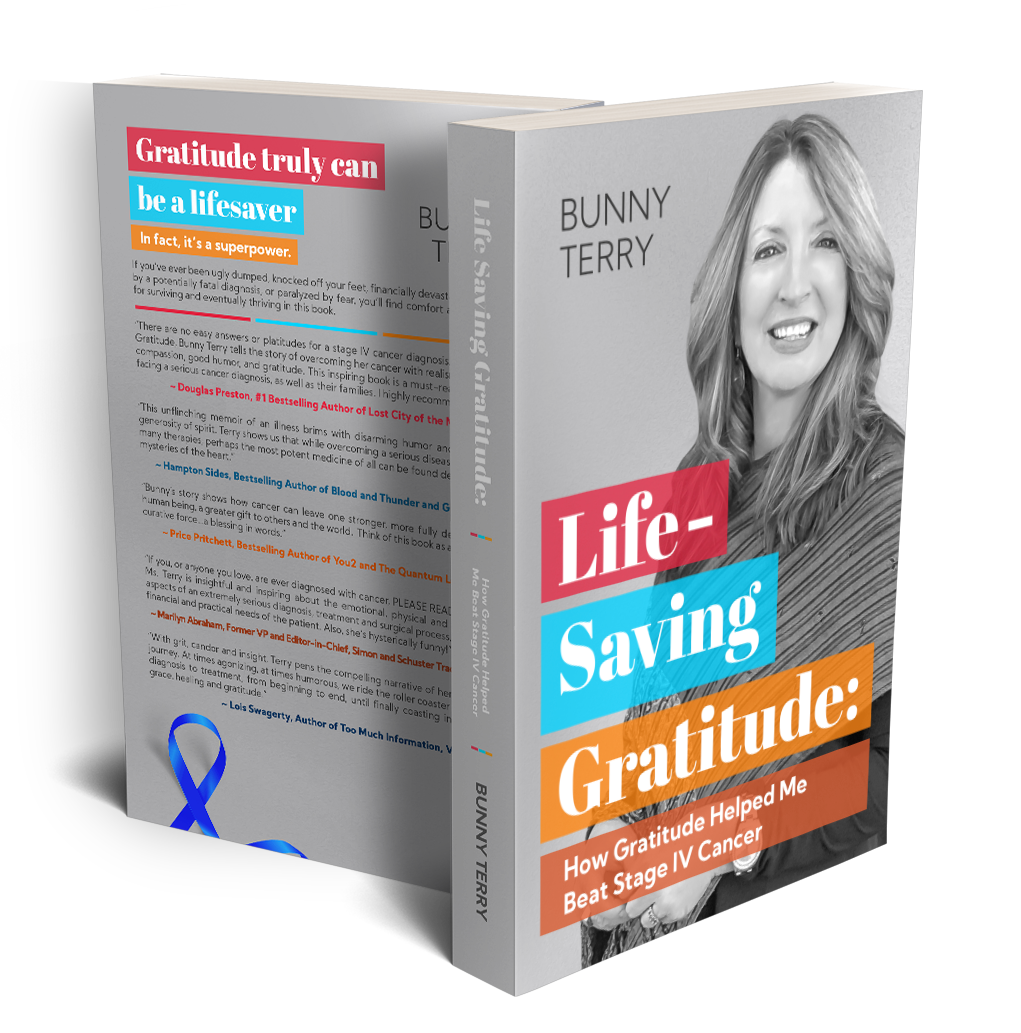
- Lifesaving Gratitude: How Gratitude Helped Me Beat Stage IV Cancer by Bunny Terry
- Cunningham + Colleagues marketing firm website
- Sante Fe Kitchen Angels
- How to Win Friends and Influence People by Dale Carnegie
- Craig’s Blog: Santa Fe Scenes
Subscribe to Lifesaving Gratitude on your favorite podcasting platform

Featuring:
Craig Cunningham
Thanks to a career in the hotel business, Craig Cunningham has traveled extensively throughout the world and now calls Santa Fe home. As an enthusiastic observer of cultures, traditions and history, Craig enjoys sharing all things Santa Fean and New Mexican.
Bunny met Craig as a fellow realtor at Keller Williams in Santa Fe. Craig’s experience as a hotelier and his expertise in sales and marketing gives him a unique perspective on customer service. Craig knows just how valuable it is to show gratitude toward his clients and colleagues.
He writes regularly about Santa Fe on his blog, Santa Fe Scenes.
Episode Transcript
Bunny: Hi everyone. This is Bunny with the Lifesaving Gratitude podcast. Just in case you don’t know me, I am a stage four colon cancer survivor and the author of Lifesaving Gratitude, which is a book about how gratitude helped me kick cancer’s ass.
Today we’re going to talk to a special guest about how marketing and marketers can use gratitude to create business and connections with clients and also for themselves to create a really positive way to do their job. But first, I just want to thank you for being here and ask that you download the podcast if you’d like. And certainly subscribe wherever you listen to other podcasts. But enough about me and enough about the podcast.
I want to introduce you to my special guest, who’s also a friend. Craig Cunningham is currently a realtor with Keller Williams, Santa Fe. And that’s how I met him. However, this is a recent career for him and he was, and correct me if I mispronounce the word, but you were a hotelier. Is that the way to say that?
Craig: Yes.
Bunny: Yes. He’s spent 30 years in corporate sales and marketing. He’s traveled extensively. I’m going to let him tell you all the places that he’s been to, but he is the founder and principal of Cunningham + Colleagues marketing consultants. He was in the past the VP of marketing and quality for Seaport Hotels and World Centers and the VP of marketing for Core North America. So welcome Craig Cunningham.
Craig: Thanks so much for having me on your podcast.
Bunny: I’m excited. I know you have some great tips for all of our listeners. When I think about these podcasts, I always think about the people that are going to want the information we’re offering. I mean, we’re here to help people and we’re here to figure out how gratitude can make everyone’s life not just easier and simpler, but also fuller. So why don’t you start, Greg? Just tell us a little bit about yourself. Tell us how in the world you ended up in this completely different career? And yet the truth is we’re still just marketers first and realtors, second. Tell me a little bit about yourself. Tell our listeners.
Craig: Yeah. So, as you said, I’ve been in marketing and sales for more than 30 years. I actually started off with an advertising and PR agency and then had the good fortune to be hired by my hotel client at the time, Wyndham hotels. At that time it was a North American chain and it’s now international.
But from then on, I was in the hotel business. It’s definitely a career where if you are not focused on client service and the whole concept of gratitude, you’re not going to be successful. I always thought of our job as just surprising and delighting our guests and making them feel like they chose the right hotel to be with. And so it was always about waking up every day and saying, “What can I do to make somebody’s day and to give them a great experience?” And, of course, to do this you have to be grateful because they opted to choose your hotel over the million other choices that they had.
So when I retired from the hotel business two years ago, I was trying to figure out what else I wanted to do with my life. I started doing more volunteering. I volunteer with Kitchen Angels here in Santa Fe to deliver meals to people who are not able to leave their homes. But I also started thinking of whether I wanted to do something else from a professional standpoint and the real estate business seemed like a natural extension, because it’s all about client service. You have to figure out ways to make people feel like they’ve made the right choice in working with you. So it’s all about being grateful every day and figuring out what can I do to help them today. How else can I extend what I’m doing for them in a way that they will appreciate and know that I appreciate them. So that’s what it’s really all about, because of course they could work with a million other other people
Bunny: Right. And let’s talk for just a second. Don’t you think that marketing has changed over the 30 years that you’ve been doing this? I mean, it seems to me that when we were kids, which was back before the crust cooled, we were sort of marketed at. Just talk for a minute about how marketing is different now than it was 10 years ago or 30 years ago.
Craig: It’s funny, because I was going to say the exact same thing. Back in the day, you were running a TV ad or a radio spot or a print ad and it was passive in that you just presented the information, unless you were direct sales. But really with the advent of so much digital media, you are instantly able to forge a relationship with customers through social media, through Facebook, Instagram, where you’re having a dialogue with them from the very beginning. This allows you to work in a much more personal way and to be able to find out much more quickly how you can serve those people.
So I think it’s changed completely. Before you just sort of put it out there into the ether and hope that something worked, and now you’re able to engage. And I’ve found that so much in real estate where I’m getting emails from folks and then it evolves from the email into a phone call or a zoom call or something like that instantly. I think that’s so much better for both people. Especially for somebody like me who wants to find ways to engage with people and to be of service to them, it makes it a lot easier and more rewarding.
Bunny: I just think about the ways that I connect with my clients. It’s as if you’re somehow conveying to those people that you’re grateful that they showed up.
Craig: Yeah, exactly. I mean, my whole thought is that it’s not a transaction, it’s a relationship. And that relationship can be multifaceted. Once you’ve sold them a house or sold their house, I like to think that we’ve formed a friendship and a bond and that relationship is going to continue. And honestly, I don’t even care if I ever get another piece of business for them. Now think of them as friends. I want to have them to my house for dinner or go have coffee or something like that.
I think that kind of thing that makes a difference for people in wanting to work with me. It’s coming from a position of wanting to be of service to them and wanting to make them happy and finding the right solution for them. I’m working with some first-time-buyers right now and I kind of feel like they’re my kids. It’s about, okay, how can I really help them with this? And they’re grateful for the counsel I’m able to give to them, and I’m grateful for the opportunity to work with them. So it’s very rewarding. I think if you approach business relationships in the same way as you would with your friends, it’s a win-win situation for everybody.
Bunny: Well, talking about those first-time home buyers, I mean, that’s one of my favorite deals. You never make the most money from those transactions, but I’m so grateful to be reminded that we are providing the American dream when we’re selling real estate. Yeah. It’s amazing. It’s my favorite experience.
Craig: Yeah. I mean, for somebody to have their first home and to be excited about how they’re going to decorate it and what they’re going to do. And with this young couple, seeing them excited when they see a house brings out all my empathy and makes me want to really go the extra mile for them to make sure they find the right house at the right price for them. And then I just never want to stop. So then it’s like, “Okay, now I’m going to find this person for you to do the plumbing, and I’m going to find this person, etc, and I’ll be with you with you to help explain things.” I just want to really continue to be of service.
Bunny: I talk a lot, especially on my blog, about Judy Camp, who was one of my first real estate mentors. She was a great friend and Linda Gammons partner for a long time before she passed away. But Judy Camp always says, “If you come from contribution, you can’t help but be successful.”
Craig: Yeah. I mean, just as I was saying, you can’t think of it as a transaction. I think, coming from contribution, how can I help you? How can I make this a better experience? How can I make this work? Because, especially in a real estate transaction, it can be stressful. It’s the biggest financial transaction for the majority of us. So how do you take the burden and the pressure away from them and sort of guide them through the process? I just think the main thing is that it’s much more fun, whether you’re doing volunteer work or in business, to wake up every day and figure out how I could make it fun for somebody else. Because then it’s fun for you and it gets you excited and passionate about what you’re doing.
Bunny: Well, it sounds like our big “why’s” are really similar. I certainly don’t want to put any words in your mouth, but it sounds like your big “why” is just to make the life of the people you come in contact with better.
Craig: Yeah. Of course making money is nice, but there are lots of ways to make money. It’s more about whether you are getting energy from it. And I think you really get energy when you’re working with someone and trying to figure out how you can help them, how you can make their day better, how you can make the service that you’re providing better. And also just doing things that saying, “What about if I do X, Y, Z?” and they’re like, “Oh, you’ll do that for me?” And I’m like, “Of course.”
I have another set of clients where the transaction was fairly complicated and we were looking at lots of properties. Coming from a corporate background, I love to do spreadsheets and PowerPoint presentations—things like that. And so after about the third thing we had to do, they’re like, “Oh, how are we going to organize all these bids?” And then one of the guys said to the other guy, “Well, Craig’s going to do a spreadsheet for us. He’s probably already got it done.” So it’s that kind of thing where you’re looking for ways to make their experience better.
Bunny: So this is always a funny question for me to ask, because I have such a loose gratitude practice other than just waking up in the morning and saying, “thank you, thank you, thank you,” and then writing things down, but do you have a practice that you follow that helps you both in your business and your personal life?
Craig: Well, since I came into real estate with Keller Williams, which focuses a lot on being servant leaders and helping people, I’ve gotten into the habit of writing three things I’m grateful for that day. It could be that it’s a beautiful day or a dog or my partner or the opportunity to help somebody or the coffee’s really good that day, but waking up and appreciating what you have in your life is a good way to get in a good mindset for the rest of it.
Bunny: Oh, absolutely. Something I always say is that we kind of rewire our brains. We do. We create new neural pathways every time we say that we’re grateful. So in terms of nuts and bolts, is there a way that you let your clients know? I mean, I find that there are a lot of young people, young entrepreneurs or people who are new to business, who forget how to tell their clients how they’re grateful for them, even if it’s a line in an email. Do you have something that you do specifically over and over?
Craig: I think for me, it’s maybe more in the actions. I think of “This is really going to be helpful if I do this or if I provide this information.” I think it’s always in my voice and the way that I write. I try to always communicate openly and in a friendly and conversational manner. But then I also think “It would be really cool and really helpful if I did X , Y , Z.” I created a whole PowerPoint just on the neighborhoods in Santa Fe, because if you’re out of town it gets confusing. And that came out of a client saying, “Well, I don’t really know the neighborhoods.” And I thought that this would be a great tool for them. So I created it and then I was able to use it with others.
So I think for me, maybe it’s sort of on the fly. I used to say in the hotel hotel business, “How can I make this a wow experience?” Because the other way to think about it is that every relationship is with people. When you’re in a service business you’re really in the business of creating memories. You can create good memories or you can create bad memory and it’s much more fun to create good memories.
Bunny: And that just comes from a spirit of generosity. I mean, you obviously want this to be the best real estate experience they’ve ever had.
Craig: Right. Right. I’m very grateful for the people that have helped me along the way. I’ve been very fortunate in my career to always work for people who were concerned about my career development and my personal development and became dear friends. And I’ve had a couple of bosses that have hired me twice in two different jobs. So I’m always grateful for the things that other people have done for me.
So then I want to pay it forward. When I came to Keller Williams and I was introduced to the team here, there was so much openness and willingness to share and help and support. It has been fantastic. What strikes me the most is how grateful I am for what other people have done for me. And how do I pay that back?
Bunny: I mean, this is not a podcast to plug Keller Williams. It’s really more to talk about mindset, but the place where I learned it was sitting in that training room and learning that my mindset was the secret sauce. I mean, that’s the success piece, right?
Craig: Yeah, exactly. It’s not just about production and everything. It’s about weight and having a sense of gratitude and contribution and a sense of abundance. And I don’t mean that in a monetary way. It could be abundance in your health or your friends or all of that kind of stuff. And I think back to you. Your experience with cancer was far worse than mine, but I did have prostate cancer about nine years ago. Everyone I worked with during that entire time when I was going for radiation every day for 10 weeks was so supportive. And then on the last day of radiation, there was this very important meeting, and everyone knew it was my last day.My whole team had a celebration for me on my last day. That was turning something that was obviously a challenging situation into something where I knew they really cared about me and supported me.
Bunny: Wow. I’m interested to hear how your mindset was in the middle of that?
Craig: I’m just by nature, an optimistic person. So even though it was scary, I felt like I was in good hands from a medical standpoint and I just felt like I was gonna beat it. I had done the education that I needed to and then it was really about having a positive mindset.
This is probably too much information, but I’ll say it anyway. You’re doing the radiation stripped down to your boxer shorts. And so I jokingly put this Facebook thing about the fact that I needed a new pair of boxer shorts for every day. And people started sending me underwear—different pairs of boxer shorts for every day. So while I was sitting there in the big machine, where you’re sort of in there and it’s buzzing and scanning and all that kind of stuff, it got to be kind of a joke with the techs: “Oh , what’s he going to be wearing today?”
Bunny: I love that.
Craig: That was a way to keep my spirits up. And also during that process, I really learned how to be very focused. I was in a waiting room with people that were going through, frankly, worse things than prostate cancer. Don’t get me wrong, prostate cancer is pretty serious. It is. People die from it. But I was seeing so many other people that were having a much more challenging time than I was. And we became a family. We all bonded together during that process, because we were all waiting, sometimes for an hour. So it’s things like that. And also things like the kitchen angels service, where it helps reboot you every day for how grateful you should be in your own life and grateful for the opportunity to help other people.
Bunny: Right. There are tons of people who do get what a gift it is. People who don’t even have a specific gratitude practice, but at least an attitude every day that you’re going to figure out something. I just wrote a blog post on limiting beliefs and one of the things that I wanted to convey is that we get to choose every single moment how we view the world. And maybe for somebody out there who’s brand new in business or who’s starting a new business. I just read a statistic that said that the entrepreneur demographics are changing. And now like 48% of new entrepreneurs are over 50. So hooray for the old people!
But I know that there are people out there right now who are thinking, “Well, I’m not any good at marketing. I’m not any good at that piece of it. I can sell stuff, but I’m not good at the marketing stuff.” I’ve got to tell you, I’m married to a guy who doesn’t believe in self promotion because he came from a generation when you played down your assets, instead of being grateful for them and talking about them. So I’d love to hear what you have to say to somebody who has that limiting belief that they can’t market. And they can’t promote themselves.
Craig: You know, we could all market ourselves, and we do it every day in our interactions. Whether we think of it as marketing or not, we’re marketing ourselves all day long in how we react and treat other people. The thought I had as you were talking about your husband thinking self-promotion sounds like a dirty word is that it doesn’t have to be you talking about “me, me, me” and “I did this million dollars in revenue.” This is kind of a turnoff in some ways, because you’re talking about yourself. But if you’re talking about how you can help somebody else and how you can provide a good experience for them with your information and knowledge, you’re not talking about yourself in that context. You’re talking about how you can be of service. I think that’s a much easier way for a lot of people from a generation where we weren’t really supposed to be talking about ourselves.
Bunny: Well, it was pre-social media. Our face wasn’t out there. We just weren’t trained to tell people, “Here’s the reason you should hire me instead of the other person.”
Craig: Yeah, exactly. I mean, now we’re all our own brands on social media. But I think that rather than saying to somebody, “Here’s why you should hire me versus somebody else,” you should just talk about how you can be of service in what you do in an authentic way. Then people are more likely to want to work with you, because you’re radiating a sense of positivity and an interest in them. And they’re not thinking that you just look at them as a transaction and then you’re onto the next person.
Bunny: I frequently use with my marketing coaching clients the example of a dinner party. If you went into a dinner party (and this is for people who are just beginning in whatever business they’re in, especially if they’re self-employed), you wouldn’t simply walk in, take your coat off and say, “Hey, I’m selling something, come and talk to me.” Right? I mean, that’s what you don’t want to do with marketing. You want to start by building a relationship. Can you talk a little bit about that?
Craig: I think it goes all the way back to Dale Carnegie’s How to Win Friends and Influence People. People do like to talk about themselves. And so the first thing is you should be listening. That was one of the first things I learned in marketing client service. You need to ask questions and learn from your clients. Focus on what they need, as opposed to talking about yourself. You really want to establish a dialogue with them about their wants and needs and hopes and fears and everything else. Then you can talk about how you can address them. But nobody wants to go in and all of a sudden have you sit down and say, “Here’s my PowerPoint about me and what I’ve done.” It should be more of establishing, from the very beginning, a relationship of openness with folks. Then, after hearing from them, you can say “Well, here’s how I think I can you and here are some ideas that I have that I could share with you.” So I think a key thing is really listening from the very beginning.
Bunny: I even found that to be helpful when I used to first go on listing appointments. I was so nervous that I would sit down and I would immediately try to book an appointment. You know, if you’re not in real estate, a listing appointment is just like sitting down with a prospective customer. I would be so nervous in the beginning and really coming from a place of scarcity where I thought, “If I don’t get this listing, I’m not sure I can pay the rent next month.” And if you’re coming from a place of scarcity, you’re likely to self-sabotage. But that’s such good advice because things changed when I finally learned how to sit back and listen: “I’m here to help you. Tell me what it is that you need. Talk to me.” It’s so powerful to give a client time to talk to you. And I think people forget to do that, right?
Craig: Yeah. And I think sometimes we do it because we’re afraid. What I’ve learned so much over the years in business working with people is that people are terrified of silence, so they will immediately start talking. If there’s a second of silence, you jump in and start babbling. Lord knows I do it. But if you just let somebody talk and let it sort of sit there for a second and not just try to be filling in all the time. It drives me crazy when people are doing that. It’s much better if you can have the client talk and then ask some more questions and then be warm and reflective about it. Back to the Dale Carnegie thing, I think one of his first points was if you’re at the dinner party, ask people about themselves. Most people do like to talk about themselves. So ask them and don’t just start talking about yourself.
Bunny: I think that even people who would say, “I don’t like to talk about myself,” really do want somebody to ask them and listen to them.
Craig: Yeah. And it’s not just asking them to go on and on. It’s more meaningful questions about, for example, why they decided to move here. Just those kinds of questions that get them thinking. Growing up in materialistic Dallas, the joke was that the questions at a party were like, “Where do you live? What do you do? What do you drive?” And so it’s not questions like that. It’s asking them more about their life experience,
Bunny: You just brought me to another completely different point, which is for any realtors out there listening: I think it’s really important to convey to your clients how grateful you are for where you live. I mean, if our lifestyle is such a selling point, don’t you think you should share that?
Craig: Oh, yeah, exactly. I mean, living in Santa Fe there’s so much beauty. I’m looking out my window right now at the beautiful blue sky. When I leave my house in the morning and I see the mountains, and then when I’m coming home at night and the sun is setting over the mountains and I see all the different colors and everything, it’s just breathtaking. It’s great to live in such a great and wonderful environment and in a place that is very spiritual, going back with the native Americans—respect for the earth and nature and all of those things—I think it does help center us more than a lot of other places.
Bunny: How do you convey that to your clients? I know you’re doing something really cool online that’s different from some other realtors.
Craig: Well, I’m not just posting on my Facebook page,” Hey, I just sold this house or just sold that house.” Well, that’s great. But I’m more talking about new experiences in Santa Fe: new restaurants, or a new place to go hiking, or something exciting that’s happening at one of the museums or things like that—enthusiastically talking about the experience of living in Santa Fe. And if down the road, by the way, you’re looking at this stuff and you decide you want to buy a house here, I would love to help you. But it’s more about conveying the reason why we all want to live here
Bunny: And tell us about your blog, because I think it’s amazing.
Craig: So I created this blog, which is called Santa Fe Scenes. It’s that same kind of thing where it’s just talking about having fun in Santa Fe. One of the things was, you know, we’ve got the old Santa Fe trail and we’ve got the old Pincus trail, but did you know that we had a Margarita trail and a Chocolate trail? Stuff like that. Just being whimsical about it and talking about some of the things are unique about the city and sharing my own passion for Santa Fe. I was very fortunate to be able to do a lot of international travel for my job. I was grateful for the opportunity that I was given to see places that I wouldn’t have seen otherwise from Bogota to Sao Paulo and Rio de Janeiro and Beijing and places like that. So I’ve always been enthusiastic about travel and now living in such a beautiful place like Santa Fe, I want to share that enthusiasm with people.
Bunny: And you’re getting some good feedback on that I bet, right?
Craig: Yes, I am. I’m getting good feedback on it. It’s been a wonderful thing to reconnect with friends who are saying, “Good for you, you old dog! You’re back out there trying something new.” Because whenever someone says, “Oh, you’re a new realtor,” I say, “Well, I’m an old new realtor. I’m 61 and I’m starting this for the first time.” But it’s been great from that perspective and the support that you get from your friends. Then people are saying, “Oh, well, I know somebody who might be interested in sending you that information.” I think that’s one of the positive things that social media has done where we’ve been able to reconnect with so many people that we might have completely lost touch with.
Bunny: Oh yeah. I did a post not very long ago about how grateful I was, and it was in the middle of all the fear over Facebook and Twitter. And I just said that it’s such a great platform for reconnecting with cousins that I haven’t seen since I was six. I mean, I just turned 60. I’m an old dog and this is a new trick for me, but I think that if you use it the right way, it’s a real gift. I also think there are so many realtors, like you said, who just post either pictures of houses that they have listed or their accomplishments. And I think they’re really missing an opportunity.
Craig: Yeah. Because then you’re just talking at someone. You’re not sharing information and excitement about things with them. People don’t want to look at that stuff. They want to look at things like the fact that there are like six great chocolate tiers in Santa Fe. And then the next time I’m in town, I want to go to each one of them. Or discovering an amazing new hiking trail or a beautiful image of a shop window or a piece of art or something like that.
Bunny: Yeah, it’s so much better than “I just listed this house at 123 main street. Don’t you wish you owned it?” Exactly.
Craig: Exactly. I think more people would react to it. I’d really like to have some of that green chili chocolate over at The Chocolate Smith or whatever. It’s much more interesting than a picture of a kitchen that has granite countertops. Oh my goodness.
Bunny: And, you know, Craig, I found that people will call me and they’ll say, “Well, I’ve been following you on Facebook for two years. And I feel like you’re my best friend. I think you’d be the right person to show me around and help me find a house.” And I bet that’s happening to you too.
Craig: Yeah, exactly. It’s funny, you mentioned that. One of the people I’ve been mentoring told me a story about how she posted a lovely picture of herself and then somebody called her and said, “I feel like I already know you because you just look like a nice person and I feel like I can trust you.” I think also that it’s our eyes and our smile and everything that conveys so much of what you’re talking about. If you have a spirit of gratitude and service and a sense of abundance, not scarcity, it shows in your face, your eyes, your smile, and your whole persona.
Bunny: Well, we’re going to have to wrap up here in a minute, but I would love to hear if you have just three great tips that you would give to somebody who feels kind of stuck in their marketing. It could be what you’ve learned in 30 years or in the last three days, whatever it is.
Craig: I think one is changing your question from “How do I market myself?” to “What can I do for this client?” or “What can I do that’s going to excite the people? How can I make them feel appreciated and valued?” And this can work in cases where you’re actually working one-on-one with a client or cases where you’re trying to figure out how to promote what you’re doing. How do I find ways to surprise and delight people? So I like to do that with social media buys, where you come up with quirky, little things to talk about that are authentically Santa Fe or a funny picture of my dog or something like that. You want to put a smile on people’s faces. And social media gives us so many opportunities to be able to do that in ways that we couldn’t before. So the main thing at the end of it is to put your client first, and then I think everything else will come from there.
Bunny: You’re absolutely right. I think as long as your passion is helping people, then success is just a natural by-product of that.
Craig: Exactly. People feel that energy and then they want to tell their friends about you.
Bunny: What I’ve found is that people want to be able to trust somebody, especially in this business where they’re making possibly the biggest purchase of their life.
Craig: Right? I’m thinking back to these younger clients. We were touring houses, and they were interested in one particular house and I was like, “No, I’m not going to let you buy this. This is not the right move.” And I think all of a sudden they’re like, “Wow, he really cares. He’s not just thinking ‘Tick tock, tick tock. We’ve seen three houses.’” This is not House Hunters International where there are the three properties and you have to buy one. So again, it’s not a transaction. It’s a journey. It’s a relationship.
Bunny: I think that’s the most important tip for somebody to take away. Whether you’re selling widgets or earrings or house cars or houses, this is not a transaction. It’s a relationship. We want people to trust you and come back over and over. I don’t know how you can love your job if you’re not doing it the way we’re doing it.
Craig: Yeah, exactly. And have fun with it. We get to meet interesting people all day long. We get to see things. We get to use our own creativity to express ourselves. I know there are people that are in jobs that don’t have that. But I also read things about the janitor in an elementary school who takes real pride in what they do, and they are going to do the best job that they possibly can. So I think in almost everything, you can come at it with a mindset of “How can I make this a great experience for me and for others?”
Bunny: That’s great stuff. Tell us where people can find you and where they can find your blog.
Craig: Well, probably the most fun thing I’m doing is the Santa Fe Scenes blog.
Bunny: Okay. And we’ll share that on the information page for the podcast. And then, of course, if people want to buy a house from you, they can find you through there?
Craig: Yeah. All my information is on there. So one stop shop.
Bunny: Craig, I’m so excited that you were here. This was fun. I think we could do it again.
Craig: Yeah. Yeah.
Bunny: Because I think this is the place where people get stuck. People who are self-employed get stuck in this part. And so I think there’s a lot of stuff that we can talk about. But I’m of course really grateful that you agreed to talk with us.
Craig: Oh, thanks. It’s been a lot of fun. I appreciate it.
Bunny: And to everybody else, thanks for being here. This is once again, the Lifesaving Gratitude podcast. I’m Bunny Terry. You are welcome to go to my website if you’d like to learn more about me and about buying my book, which is all about gratitude and how gratitude helped me kick stage four cancer’s ass. And we’d love to have you follow us and subscribe on spot Spotify, Apple, or wherever you listen to podcasts. Thanks so much, Craig.
Craig: Thank you. Next time.
About the Podcast
Gratitude is a superpower. It can transform—and even save—your life. Author and activist Bunny Terry discovered the life-saving power of gratitude when she survived Stage IV colon cancer. She interviews a wide variety of guests who have also used the art and science of gratitude to survive, and thrive, in their own lives.
Recent Episodes
I Love New Mexico Teachers: Bunny Terry
About the Episode: Summer is coming to an end and a new school year is...
I Love New Mexico Food: Kirk Muncrief of AlbuKirky Seasonings
About the Episode: In New Mexico you know we love food AND we love spicy...
100th Episode Recap: Bunny & Johanna
About the Episode: The I Love New Mexico podcast has made it to 100...
 Bunny Terry is a native New Mexican who grew up on a farm in northeastern New Mexico. Her first writing job was typing stories on index cards on her family’s Underwood, stories that were uncannily like the ones she read over and over in O Ye’ Jigs and Julips, her favorite childhood book. No one thought to save those index cards for posterity, although there is the theory sarcastically circulated by her siblings that they will certainly be worth millions someday.